
What is the advice of Dr.Hahnemann about the treatment of alternating disease?

Lost your password? Please enter your email address. You will receive a link and will create a new password via email.
Please briefly explain why you feel this question should be reported.
Please briefly explain why you feel this answer should be reported.
Please briefly explain why you feel this user should be reported.
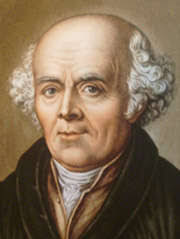
Dr. Hahnemann treats “alternating” (i.e. periodically shifting) acute diseases almost exactly like simple acute diseases—with one proviso: you prescribe only for whatever set of symptoms is on top at the moment of prescribing, and then wait for the next phase to treat that in turn. In his own wordsRead more
Dr. Hahnemann treats “alternating” (i.e. periodically shifting) acute diseases almost exactly like simple acute diseases—with one proviso: you prescribe only for whatever set of symptoms is on top at the moment of prescribing, and then wait for the next phase to treat that in turn. In his own words (Organon § 72–73):
1. Acute diseases come in three types:
a) Simple (one fixed picture)
b) Composite (two or more pictures at once)
c) Alternating (two or more pictures that appear one after the other)
2. For simple and composite acute diseases you select the one single homeopathic remedy that covers the totality of symptoms most accurately.
3. For alternating diseases you never try to “cover” both alternating pictures at once. Instead you:
• Wait for the patient’s symptoms to decide which phase (A or B) is active.
• Give solely the homeopathic remedy that corresponds to that present phase.
• Then cease and observe—when the other phase re-establishes itself you similarly give the remedy that fits that new picture.
By doing this, you never mix or dilute the vital force’s reaction with competing stimuli, but rather allow each diseased phase to be repelled in turn.
See less