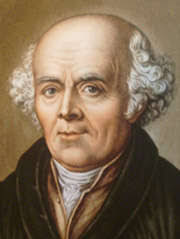

What do you mean by homoeopathic case taking?

Lost your password? Please enter your email address. You will receive a link and will create a new password via email.
Please briefly explain why you feel this question should be reported.
Please briefly explain why you feel this answer should be reported.
Please briefly explain why you feel this user should be reported.
Homoeopathic Case Taking: Classical Foundations and Modern Perspectives 1. Introduction to Homoeopathic Case Taking Homoeopathic case taking represents the fundamental process by which homoeopathic practitioners gather comprehensive information about patients to identify the most appropriate individRead more
Homoeopathic Case Taking: Classical Foundations and Modern Perspectives
1. Introduction to Homoeopathic Case Taking
Homoeopathic case taking represents the fundamental process by which homoeopathic practitioners gather comprehensive information about patients to identify the most appropriate individualized remedy. Unlike conventional medical history-taking, homoeopathic case taking extends beyond physical symptoms to encompass the totality of the patient’s experience, including mental, emotional, and constitutional characteristics. The purpose of case taking in homoeopathy is to reveal the characteristic expression of disease as manifested in the individual, thereby enabling the selection of a simillimum—a remedy that produces similar symptoms in healthy individuals (1).
The philosophical foundation of homoeopathic case taking rests upon three fundamental principles: the law of similars (like cures like), the principle of individualization, and the concept of vital force disturbance. Samuel Hahnemann, the founder of homoeopathy, developed a systematic approach to case taking that emphasized thoroughness, patience, and unbiased observation. Over the past two centuries, various scholars have refined and expanded these principles while maintaining the core philosophical commitments of the system. This comprehensive approach distinguishes homoeopathy from other medical systems and requires sophisticated clinical skills from practitioners (2).
2. Hahnemann’s Classical Approach to Case Taking
Samuel Hahnemann laid the groundwork for homoeopathic case taking in his seminal work, the Organon of Medicine, particularly in aphorisms 83 through 104. In these aphorisms, Hahnemann provided detailed instructions for the physician in approaching patients and gathering case information. The fundamental principle underlying Hahnemann’s methodology was that the patient should be permitted to describe their suffering in their own words, without interruption or leading questions. Hahnemann believed that the physician’s premature judgments and theoretical constructs could obscure the true picture of the disease manifestation (3).
Hahnemann emphasized the necessity of patience and thoroughness in case taking, recognizing that the characteristic symptoms often emerge only after careful, unhurried exploration. He instructed physicians to create an atmosphere of trust and receptivity, allowing patients to express their concerns without external influence. The physician should maintain a neutral demeanor, neither agreeing nor disagreeing with patient statements, as such responses might inhibit the free flow of information. Furthermore, Hahnemann stressed the importance of recording the case in the patient’s own words, preserving the authentic expression of symptoms as experienced by the individual (4).
In aphorism 84, Hahnemann outlined the sequence of information gathering, which included the patient’s description of their current complaints, the history of their development, and the factors that ameliorate or aggravate the symptoms. He also directed attention to the patient’s general state, including sleep, appetite, thirst, and mental-emotional characteristics. Hahnemann recognized that chronic diseases required particularly extensive case taking, as their manifestations often trace back to earlier life events and involve complex miasmatic interrelationships. The physician must investigate the patient’s constitution, temperament, and lifestyle to fully understand the pattern of disease expression (5).
3. Kent’s Refinement of Case Taking Philosophy
James Tyler Kent, the prominent American homoeopath of the late nineteenth and early twentieth centuries, substantially expanded and systematized the approach to case taking. Kent’s contributions appear primarily in his seminal work, “Lectures on Homoeopathic Philosophy,” which served as a foundational text for generations of homoeopaths. Kent emphasized the hierarchical arrangement of symptoms, placing mental symptoms at the apex of importance, followed by general symptoms and particular symptoms. This hierarchy guided practitioners in identifying the most significant characteristic features of the case (6).
Kent instructed practitioners to allow patients to tell their stories without interruption, recognizing that the patient’s narrative often contains the essential clues to the remedy picture. He developed the concept of the “totality of symptoms” into a sophisticated framework that integrated physical, mental, and emotional manifestations. Kent believed that observation played a crucial role in case taking, as patients might not accurately report observable phenomena such as facial expressions, gestures, posture, and behavioral patterns. The skilled physician learns to observe these details while simultaneously listening to the patient’s account (7).
The Kentian approach emphasizes the importance of understanding the patient’s unique response pattern to their environment, including their reactions to temperature, weather, time of day, food, and emotional stresses. Kent developed detailed instructions for exploring the physical generals, including sleep positions, dreams, cravings and aversions, perspiration patterns, and modal responses. He stressed that the case record should reflect the entire human being, not merely isolated symptoms, thereby preserving the holistic picture necessary for accurate prescription. Kent’s methodology also incorporated attention to the patient’s life circumstances, past medical history, and family history as relevant to understanding the miasmic load and constitutional tendencies (8).
4. Views of Classical Scholars
Several classical scholars contributed significant insights to the methodology of homoeopathic case taking. Constantin Hering, known for his “Directions for Prescribing,” emphasized the importance of understanding the direction of cure—moving from more vital organs outward, from above downward, and in reverse order of symptom appearance. This understanding required careful initial documentation to track subsequent changes during treatment. Hering’s contributions highlighted the dynamic nature of case taking, recognizing that the initial assessment serves as a baseline against which future progress must be measured (9).
T.F. Allen contributed substantially to the standardization of case record formats and the systematic approach to symptom documentation. He emphasized the importance of obtaining complete symptom descriptions, including location, sensation, modality, and timing for each complaint. Allen’s work on constitutional types and diatheses provided frameworks for organizing case information according to underlying predispositions. The development of comprehensive case records became essential for teaching purposes and for maintaining continuity of care across multiple consultations (10).
C.M. Boger expanded upon Boenninghausen’s work and developed the Synoptic Key and General Analysis as tools for case analysis. Boger’s approach emphasized the importance of recognizing characteristic generals and understanding the patient’s unique mode of reaction. He taught practitioners to look beyond presenting symptoms to identify the underlying pattern that would guide remedy selection. Boger’s contributions demonstrate the evolution of case analysis methods that emerged directly from the case taking process, showing how thorough initial documentation enables sophisticated analysis (11).
5. Modern Scholars’ Perspectives on Case Taking
Contemporary homoeopathic scholars have brought significant innovations to case taking methodology while honoring classical foundations. Alastair Gray, in his comprehensive work “Case Analysis: Best Practice and Creating Meaning in the Consulting Room,” emphasizes that modern case taking must integrate traditional principles with contemporary understanding of therapeutic relationships. Gray argues that the case taking process itself has healing dimensions, as patients experience being truly heard and understood. This perspective expands the purpose of case taking beyond mere symptom collection to encompass therapeutic engagement and rapport building (12).
Research published in recent years has explored various aspects of homoeopathic case taking from methodological perspectives. A comprehensive review published in 2025 examined classical foundations, theoretical constructs, procedural steps, psychodynamic elements, and modern developments in homoeopathic case taking. The authors noted that contemporary approaches must balance the need for thorough documentation with practical constraints of clinical practice. They proposed strategies for revitalizing classical case taking by integrating technology without sacrificing personalization, optimizing time management, and incorporating validated assessment tools alongside traditional methods (13).
George Vithoulkas, the contemporary Greek master of homoeopathy, has emphasized the importance of understanding the hierarchical structure of symptoms in modern case taking. His approach builds upon classical foundations while incorporating insights from decades of clinical practice and teaching. Vithoulkas has highlighted the significance of the “essential modulation” of symptoms—the unique way in which each patient experiences and expresses their complaints. This approach requires deep attention to the quality of symptoms rather than merely their presence or absence, distinguishing genuinely characteristic features from common or incidental findings (14).
Modern scholars have also addressed the challenges of case taking in different clinical contexts. Research has examined approaches for acute versus chronic diseases, epidemic prescribing situations, and patients with complex multisystem complaints. Contemporary education emphasizes the development of interviewing skills, the ability to establish therapeutic rapport, and the capacity for careful observation. The integration of technology, including case management software and digital resources, has been explored as a means of enhancing rather than replacing the essential human elements of the clinical encounter (15).
6. Contemporary Best Practices in Case Taking
Current best practices in homoeopathic case taking integrate insights from classical scholars with modern understanding of clinical methodology. The process begins with establishing appropriate clinical conditions, including sufficient time, privacy, and a professional yet warm atmosphere. Practitioners are trained to begin with open-ended questions that allow patients to describe their concerns freely, then progress to more specific inquiries as needed. The case taker maintains awareness of both verbal and non-verbal communication, attending to tone, pace, hesitations, and emotional responses (16).
Documentation practices have evolved to incorporate both traditional elements and modern requirements. Case records should capture the chief complaint in the patient’s words, the complete symptom picture including location, sensation, modality, and timing, the mental-emotional state, and the physical generals. Contemporary practitioners also attend to the patient’s narrative structure—how they organize their story, what they emphasize, and what they omit—as this reveals important information about their characteristic expression. The case record serves multiple purposes, including guiding prescription, tracking progress, and facilitating communication among practitioners (17).
The analysis phase following case taking has received considerable attention from modern scholars. Contemporary approaches recognize multiple valid methods for case analysis, including classical totality-based methods, Boenninghausen’s characteristic approach, Kentian hierarchy methods, and Boger-style synthesis approaches. Practitioners are encouraged to develop competence in multiple methods and to recognize situations where different approaches may be most appropriate. The goal remains the identification of the simillimum based on the characteristic totality of symptoms, though the pathway to this goal may vary according to case type and practitioner training (18).
7. Conclusion
Homoeopathic case taking represents a sophisticated clinical methodology that has evolved substantially since Hahnemann’s original contributions while maintaining its philosophical foundations. Classical scholars established the essential principles: thoroughness, patience, unbiased observation, and attention to the whole person. Modern scholars have refined these principles, developed new analytical tools, and integrated contemporary understanding of therapeutic relationships and clinical methodology. The continued development of homoeopathic case taking methodology ensures that this essential clinical skill remains responsive to contemporary needs while honoring the tradition that has made homoeopathy a complete medical system for over two centuries (19).
The quality of case taking directly influences the accuracy of prescription and the effectiveness of treatment. As contemporary practitioners engage with both classical texts and modern innovations, they contribute to the ongoing evolution of this essential art. The integration of traditional wisdom with contemporary clinical insights ensures that homoeopathic case taking will continue to serve practitioners and patients well into the future.
Reference List
1. Hahnemann S. Organon of medicine. 6th ed. Translated by Künzli J, Naumann A, Borriss L. London: Homoeopathic Publishing Company; 1982. Aphorisms 83-104.
2. Vithoulkas G. The science of homoeopathy. New York: Grove Press; 1980.
3. Hahnemann S. Organon of medicine. 5th ed. Translated by Brewster-Orey WE. Philadelphia: R. Hakim; 1849. Aphorisms 83-104.
4. Close S. The genius of homoeopathy: lectures and essays on homoeopathic philosophy. Reprint ed. New Delhi: B. Jain Publishers; 2000.
5. Committee on the Use of Complementary and Alternative Medicine in Pediatric and Adult Populations; Board on Health Promotion and Disease Prevention; Institute of Medicine. In: Pace S, editor. Complementary and alternative medicine in the United States. Washington (DC): National Academies Press; 2005.
6. Kent JT. Lectures on homoeopathic philosophy. 3rd ed. Chicago: Ehrhart and Karl; 1929.
7. Murphy R. Homoeopathic materia medica. 2nd rev ed. New Delhi: B. Jain Publishers; 2002.
8. Complete Repertory. RadarOpus [software on internet]. Version 2.2.0. 2024. Available from: https://www.radaropus.com
9. Hering C. The guiding symptoms of our materia medica. Reprint ed. New Delhi: B. Jain Publishers; 1996. Volume 1.
10. Allen TF. The encyclopedia of pure materia medica. Reprint ed. New Delhi: B. Jain Publishers; 1999.
11. Boger CM. Studies in the philosophy of healing. 2nd ed. Revised. New Delhi: B. Jain Publishers; 1991.
12. Gray A. Case analysis: best practice and creating meaning in the consulting room. Epsom (UK): The Homoeopathic Development Foundation; 2011.
13. HOMEOPATHIC CASE TAKING REVISITED: A detailed research perspective on classical and modern methods [Internet]. ResearchGate. 2025 [cited 2025 May 22]. Available from: https://www.researchgate.net/publication/397674882_HOMEOPATHIC_CASE_TAKING_REVISITED_A_DETAILED_RESEARCH_PERSPECTIVE_ON_CLASSICAL_AND_MODERN_METHODS
14. Vithoulkas G. Learning tools: Organon of Hahnemann [Internet]. Vithoulkas COMP; 2025 [cited 2025 May 22]. Available from: https://www.vithoulkas.com/learning-tools/organon/organon-hahnemann/
15. New York School of Homoeopathy. Methods of case-taking at NYSH [Internet]. NYSH; 2024 [cited 2025 May 22]. Available from: https://nyhomeopathy.com/methods-of-case-taking-at-nysh-2/
16. Master F. Revitalizing the practice of classical homoeopathic case taking. Int J Res Pharm [Internet]. 2025 [cited 2025 May 22];6(3). Available from: https://ijrpr.com/uploads/V6ISSUE3/IJRPR39670.pdf
17. Smith JL. Taking the case of homeopathy [PhD thesis on the Internet]. Bournemouth: Bournemouth University; 2013 [cited 2025 May 22]. Available from: https://eprints.bournemouth.ac.uk/20976/1/Smith%2CJuliet_PhD_2012.pdf
18. Ahlbrecht J. From case analysis to case synthesis [Internet]. Hpathy.com. 2023 [cited 2025 May 22]. Available from: https://hpathy.com/homeopathy-papers/from-case-analysis-to-case-synthesis/
19. Maftei NM, et al. Therapeutic applications for homeopathy in clinical practice. PMC [Internet]. 2024 [cited 2025 May 22]; PMC11782339. Available from: https://pmc.ncbi.nlm.nih.gov/articles/PMC11782339/
You can follow
See less