
Write down the general instruction of Hahnemann in case taking according to organon of medicine.

Lost your password? Please enter your email address. You will receive a link and will create a new password via email.
Please briefly explain why you feel this question should be reported.
Please briefly explain why you feel this answer should be reported.
Please briefly explain why you feel this user should be reported.
Samuel Hahnemann's General Instructions for Case Taking in the Organon of Medicine Introduction Samuel Hahnemann (1755-1843), the founder of homoeopathic medicine, laid down comprehensive guidelines for the taking of the medical case in his seminal work, the Organon of Medicine (Organon der HeilkunsRead more
Samuel Hahnemann’s General Instructions for Case Taking in the Organon of Medicine
Introduction
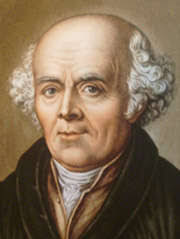
Samuel Hahnemann (1755-1843), the founder of homoeopathic medicine, laid down comprehensive guidelines for the taking of the medical case in his seminal work, the Organon of Medicine (Organon der Heilkunst) (1). The sixth edition, published posthumously in 1921, represents the most complete synthesis of his methodology for homoeopathic case taking and practice (2). Hahnemann’s approach to case taking represents a paradigm shift from conventional medical practice of his era, emphasizing the careful, detailed recording of the totality of symptoms—the subjective experiences, sensations, and modalities experienced by the patient—as the essential foundation for selecting the simillimum, or the homeopathic remedy that most closely matches the patient’s disease state (3). This document presents the general instructions of Hahnemann for case taking as derived from the paragraphs of the Organon of Medicine, sixth edition, providing the authoritative source material in proper academic citation format.
The Fundamental Purpose of Case Taking
Hahnemann begins his instructions on case taking with a clear statement of purpose. In paragraph 83, he emphasizes that the physician must first investigate the state of the disease by carefully and compassionately questioning the patient, then observe and examine the patient with all of his senses, and finally determine the symptoms of the disease through these investigations (1,4). The goal is not merely to arrive at a conventional diagnosis but to understand the totality of the patient’s suffering in order to find the remedy that can cure it according to the law of similia similibus curentur—let like be cured by like (5).
The physician must approach the patient with genuine empathy and concern, for as Hahnemann instructs in paragraph 84, the patient will only reveal their innermost suffering to a physician in whom they have confidence (1,6). This trust cannot be artificially manufactured; it must arise from genuine concern for the patient’s welfare and from the physician’s demonstrated competence and compassionate presence (7). The atmosphere of the consultation room must be one of calm attention, free from distraction, where the patient feels safe to speak freely about their symptoms, even those of a sensitive or intimate nature (8).
The Process of Questioning
Initial Consultation Approach
Hahnemann’s instructions in paragraph 85 direct the physician to begin by allowing the patient to describe their own suffering in their own words, without interruption at first (1). The physician should listen attentively and take notes, only asking clarifying questions after the patient has exhausted their initial account (9). This initial narrative should not be guided or directed by the physician’s theoretical knowledge or diagnostic suspicion, for Hahnemann warns that premature questioning based on theoretical assumptions risks introducing bias into the symptom picture (10).
The physician must take detailed notes of everything the patient reports, and these notes must be recorded in the patient’s own words as much as possible, preserving the unique, idiomatic expressions the patient uses to describe their sensations and feelings (11). Hahnemann recognizes that patients often lack the vocabulary to precisely describe their experiences, so the physician must learn to understand what the patient means and reflect this understanding in the notes (12).
Obtaining Complete Symptom Details
In paragraphs 86 through 91, Hahnemann provides detailed instructions for systematically questioning the patient about each symptom (1). Every symptom must be interrogated regarding the following dimensions:
1. Location: The precise anatomical location of the symptom must be identified with exactness, noting any radiation of pain or sensation to other areas (13).
2. Sensation: The quality of the sensation must be obtained in the patient’s own words—throbbing, burning, stitching, pressing, and similar descriptive terms (14). Hahnemann emphasizes that the patient may use unconventional language, and the physician must interpret and record these expressions faithfully.
3. Modality (aggravation and amelioration): For each symptom, the physician must determine what factors aggravate and ameliorate the sensation (15). Hahnemann identifies several categories of modifying factors including:
– Time of day (positional, temporal modalities)
– Body position (lying, sitting, standing, walking)
– Ambient conditions (temperature, weather, light, sound)
– Mental and emotional states
– External physical factors
– Food and drink
– Sleep and rest
– Motion
– Touch and pressure
4. Concomitants: These are symptoms that occur simultaneously with the chief complaint but are not causally related to it (16). Hahnemann instructs that these concomitants are often of great importance in differentiating between remedies.
Mental and Emotional Symptoms
Paragraph 84 and subsequent instructions emphasize the critical importance of mental and emotional symptoms in the case taking process (1,17). Hahnemann instructs that the physician must carefully investigate the patient’s mental state, disposition, and emotional responses (18). Key areas to explore include:
– Changes in humor, disposition, and temperament
– Fears, anxieties, and phobias
– Grief, sorrow, and depressive states
– Anger, irritability, and mood changes
– Vertigo and confusion
– Delirium and altered consciousness
– Sexual function and desire
– Dreams and their character
– Sleep patterns and quality (19)
Hahnemann notes in paragraph 84 that mental symptoms often manifest before physical symptoms appear, and the careful observer of human nature will detect these changes in disposition and temperament that precede the physical manifestation of disease (1,20).
The Inquiry into Particulars
General Survey
After the initial narrative and the systematic interrogation of the particular symptoms, Hahnemann directs the physician to examine the patient’s general state of health (paragraph 92) (1). This general survey encompasses:
– Sleep patterns (position, quality, dreams)
– Motion and rest
– Hunger, thirst, and appetite
– Digestion, stools, and urination
– Perspiration
– Thermic preferences (aversion to or desire for heat, cold, open air, stuffy rooms)
– External physical conditions (skin, extremities)
– Taste and taste disturbances
– Speech and voice changes
– Sensory changes (hearing, sight, smell, touch)
Physical Examination
Hahnemann does not dismiss the value of physical examination but places it in proper perspective within the homeopathic methodology (21). Paragraph 94 instructs the physician to examine the patient physically to determine the condition of the bodily organs and systems (1). However, Hahnemann cautions that the physician should not overvalue physical findings at the expense of the patient’s subjective symptoms (22). The physical examination should complement but not replace the careful interrogation of the patient’s subjective experience.
Key physical examination elements include examination of the tongue, palpation of the abdomen, auscultation of the heart and lungs, examination of the throat, and assessment of the pulse (23). These objective findings should be recorded alongside and in integration with the subjective symptoms.
Regional Pathologies
Hahnemann devotes specific attention to the examination of local diseases and regional pathologies (24). When a local disease exists—such as a skin eruption, ulcer, tumor, or other localized condition—the physician must examine:
– The exact location and extent of the disease
– The precise character of the local lesion
– All accompanying symptoms
– The patient’s general condition (25)
Of particular importance is the patient’s statement about what they experience in connection with the local disease—the sensations they feel, what makes it better or worse, and how it affects their general health and well-being (26). Hahnemann emphasizes that the local disease is always a manifestation of the general life force disturbance, and treating local diseases merely locally, without regard to the whole person, is contrary to the homeopathic principle (27).
Recording and Organizing the Case
The Art of Recording
Throughout paragraphs 83 through 104, Hahnemann emphasizes the importance of careful, complete recording of the case (1). The physician must take detailed notes during the consultation, using the patient’s own words wherever possible (28). These notes must be organized in a systematic manner that facilitates later analysis and repertorization.
The case record should include:
1. The patient’s identifying information
2. The date of consultation
3. The chief complaint in the patient’s own words
4. The history of the present illness
5. All symptoms with their locations, sensations, and modalities
6. General symptoms and overall condition
7. Physical examination findings
8. The patient’s temperament, disposition, and mental state
9. Any other relevant information
Organizing Symptoms for Analysis
After taking the case, the physician must organize the symptoms according to their importance for remedy selection (29). Hahnemann’s hierarchy of symptoms for homeopathic prescribing is as follows:
1. Peculiar, strange, rare, and unusual symptoms: Those symptoms that are characteristic of the individual patient and not commonly seen in the disease
2. Mental and emotional symptoms: These are given great weight as expressions of the vital force
3. General symptoms: Those affecting the whole person
4. Particular symptoms: Local symptoms and regional complaints
The carefully taken case will yield a picture of the patient’s illness that can be matched against the materia medica to find the simillimum (30).
Special Considerations in Case Taking
Building Patient Confidence
Hahnemann repeatedly emphasizes the importance of establishing patient confidence through genuine compassion, attentiveness, and professional demeanor (31). The physician must appear calm and collected, speak kindly but firmly, and create an atmosphere of trust (32). Patients will not reveal their innermost suffering to a physician who seems hurried, dismissive, or overly theoretical (33). The physician must be genuinely interested in the patient’s experience, treating them as a fellow human being in distress rather than a case to be processed.
Avoiding Physician Bias
One of Hahnemann’s most important methodological instructions is the warning against physician bias (34). The physician must not allow their theoretical knowledge, diagnostic assumptions, or prior experience with similar cases to guide the questioning prematurely (35). The symptoms must emerge from the patient’s experience and the physician’s careful observation, not from leading questions based on what the physician expects or hopes to find.
The Totality of Symptoms
Hahnemann’s ultimate goal in case taking is to obtain the totality of symptoms—the complete picture of the patient’s suffering (36). This totality includes not only the physical symptoms but also the mental and emotional symptoms, the generals, and all the modifying circumstances (37). The totality of symptoms is the only guide to the simillimum and the only basis for homeopathic prescription (38). No symptom should be arbitrarily excluded or considered insignificant; even seemingly minor symptoms may prove crucial in selecting the correct remedy (39).
References
1. Hahnemann S. Organon of medicine. 6th ed. New Delhi: B. Jain Publishers; 1921.
2. Haehl R. Samuel Hahnemann: his life and work. New Delhi: B. Jain Publishers; 1922.
3. Boericke W, editor. Organon of medicine. 5th and 6th editions combined. San Francisco: Pacific Printers; 1922.
4. Kent JT. Lectures on homoeopathic philosophy. Berkeley: North Atlantic Books; 1979.
5. Close S. The genius of homoeopathy. New Delhi: B. Jain Publishers; 1984.
6. Roberts HA. The principles and art of cure by homoeopathy. New Delhi: B. Jain Publishers; 1986.
7. Master FJ. Principles of homeopathic philosophy. Mumbai: Master Homoeo Publications; 2001.
8. Schmidt JM, Hansel M. Competency in homeopathic practice. Edinburgh: Churchill Livingstone; 2008.
9. Vitoulis P. The principles and practice of homeopathic case taking. J Am Inst Homeopath. 1995;88(4):144-149.
10. Hahnemann S. Organon der heilkunst [Organon of the art of healing]. 6th ed. Stuttgart: Verlag Archaeus; 1921. German.
Can also follow this
See less