
"Syphilis and sycosis are the result of evil action."-explain.

Lost your password? Please enter your email address. You will receive a link and will create a new password via email.
Please briefly explain why you feel this question should be reported.
Please briefly explain why you feel this answer should be reported.
Please briefly explain why you feel this user should be reported.
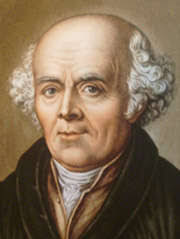
In classical homeopathy, especially in the writings of Samuel Hahnemann and his followers, the concept of “miasms” is used to describe deep-seated, latent disturbances in the vital force that predispose individuals to chronic diseases. The statement that “syphilis and sycosis are the result of evilRead more
In classical homeopathy, especially in the writings of Samuel Hahnemann and his followers, the concept of “miasms” is used to describe deep-seated, latent disturbances in the vital force that predispose individuals to chronic diseases. The statement that “syphilis and sycosis are the result of evil action” reflects this philosophical framework, wherein disturbances in the natural harmony of the body are thought to arise from actions that disrupt its inherent balance.
The Concept of Miasms in Homeopathy:
Homeopathic miasms are not merely infectious agents in the conventional sense; they are seen as underlying predispositions that color the individual’s overall constitution. They represent an energetic or dynamic disturbance that, once established, can cause a wide range of physical, mental, and emotional symptoms over time. In this context, the phrase “evil action” is not simply about moral condemnation but a symbolic acknowledgment that certain behaviors or interventions—actions that go against the natural impulses and rhythms of the body—can leave a lasting, adverse imprint on the vital force.
Syphilis as a Miasmatic Influence:
Syphilis, in homeopathic terms, is regarded not only as a sexually transmitted disease but as a miasm that can have far-reaching effects beyond its initial infection. When an individual contracts syphilis—and especially if the condition is not addressed appropriately or is suppressed without truly engaging the body’s deeper healing mechanisms—the disturbance is thought to leave behind a chronic state of vulnerability. Historically, this was linked with the idea of “evil action” in the sense that engaging in injudicious or morally questionable sexual behavior was seen as an action that could upset the natural balance of the body. In this view, the harmful consequences are not just limited to the physical transmission of bacteria but extend deeply into the constitution, setting the stage for a series of later health issues.
Sycosis and the Suppression of Natural Functions:
Similarly, sycosis is another miasm recognized in homeopathy, often associated with conditions involving glandular or mucous membranes—for example, warts or certain chronic inflammatory disorders. The term “sycosis” has historically been linked with the suppression or misdirection of natural bodily secretions, especially those of a sexual nature. Here too, “evil action” can be interpreted as the result of deliberate or unconscious behaviors that interfere with the body’s natural discharge or the healthy expression of sexuality. This suppression or distortion of normal functions is believed to cause a lasting energetic imbalance, making the individual more susceptible to a range of chronic conditions later in life.
Reinterpreting “Evil Action” in a Modern Context:
It’s important to note that while the language of “evil action” reflects the historical and cultural context in which these ideas were formulated, many modern homeopaths interpret these miasms in less moralistic terms. Today, the focus is more on understanding these disturbances as expressions of constitutional vulnerability. Rather than assigning blame, the miasmatic theory is used as a tool to understand why some individuals have a greater susceptibility to chronic, recurring conditions. The goal of treatment is to stimulate the vital force in a way that encourages a natural, complete healing process—restoring balance rather than merely suppressing symptoms.
Moving Toward Holistic Healing:
In this framework, both syphilis and sycosis are seen as challenges to the natural order, resulting from actions—whether through physical behavior or through the suppression of natural physiological processes—that undermine the body’s integrity. Homeopathic treatment, therefore, aims not only to alleviate the immediate symptoms but also to address these deeper, underlying disturbances. By selecting remedies that resonate with the totality of the patient’s symptoms—physical, emotional, and mental—the homeopath works to dissolve these residual miasmatic influences, paving the way for a more robust and enduring state of health.
See less