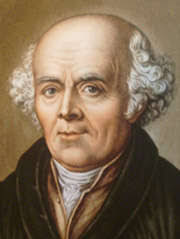

Discuss about the philosophical concept of Dr.Hahnemann on life, health and disease.

Lost your password? Please enter your email address. You will receive a link and will create a new password via email.
Please briefly explain why you feel this question should be reported.
Please briefly explain why you feel this answer should be reported.
Please briefly explain why you feel this user should be reported.
The Philosophical System of Samuel Hahnemann on Life, Health, and Disease: A Comprehensive Analysis Introduction: The Context of Hahnemann's Philosophical Framework Samuel Christian Friedrich Hahnemann (1755-1843), the German physician who founded homOeopathy, developed one of the most comprehensiveRead more
The Philosophical System of Samuel Hahnemann on Life, Health, and Disease: A Comprehensive Analysis
Introduction: The Context of Hahnemann’s Philosophical Framework
Samuel Christian Friedrich Hahnemann (1755-1843), the German physician who founded homOeopathy, developed one of the most comprehensive and systematic philosophical frameworks for understanding human existence in health and disease. His magnum opus, the Organon of Medicine, underwent six editions during his lifetime, each revision refining and deepening his understanding of the fundamental principles governing human life. Hahnemann’s philosophy represents a remarkable synthesis of vitalistic traditions, empirical observation, and rational inquiry that challenged the materialistic medical orthodoxy of his era. The philosophical concepts he articulated regarding life, health, and disease continue to influence homeopathic practice and offer profound insights into the nature of human existence that remain relevant to contemporary discussions in philosophy of medicine and holistic health paradigms.
Hahnemann’s philosophical system emerged from a profound dissatisfaction with the medical practices of his time, which often proved more harmful than beneficial to patients. His rejection of aggressive treatments such as bloodletting and heavy dosing led him to develop a more humane and rational approach to healing based on natural laws. The philosophical foundations he established were not merely practical guidelines for treatment but represented a comprehensive worldview that addressed the fundamental questions of what constitutes life, what is the essence of health, and how disease originates and can be resolved. To understand Hahnemann’s medical system fully, one must appreciate the philosophical depth of his thinking, which transcends mere therapeutic technique to engage with the nature of human existence itself.
The Concept of Vital Force: The Dynamis as the Essence of Life
The Dynamis and Its Philosophical Significance
At the heart of Hahnemann’s philosophy lies the concept of the vital force, which he terms the “dynamis” or “vital principle.” This concept represents Hahnemann’s understanding of the fundamental energy that animates living organisms and distinguishes them from mere mechanical systems. The vital force, in Hahnemann’s framework, is not a physical substance that can be dissected or analyzed through chemical means but rather a dynamic, invisible principle that coordinates all the functions of the living organism. Aphorism 10 of the *Organon* articulates this concept by describing the vital force as the power that animates the material body, governing its sensations and functions, maintaining the harmony that constitutes health.
Hahnemann’s concept of the vital force draws upon vitalistic traditions that have ancient philosophical roots, including those found in Aristotelian biology and various streams of Western and Eastern thought. However, he articulated this concept with a precision and consistency that make his version particularly distinctive. The vital force, according to Hahnemann, operates according to its own laws and principles that cannot be reduced to or explained by the laws of physics or chemistry alone. This positioned his philosophy in opposition to the mechanistic worldviews that dominated scientific thinking of the Enlightenment era, which sought to explain all phenomena, including life, in purely material terms.
The philosophical implications of Hahnemann’s vital force concept are profound. It suggests that living organisms are not merely complex machines but are fundamentally different kinds of entities characterized by self-organization, inherent purposiveness, and dynamic equilibrium. The vital force maintains the organism as a unified whole, coordinating the activities of various organs and systems in a manner that serves the overall health and integrity of the being. When this coordination is disturbed, disease results, not merely at the physical level but at the fundamental level of the vital force itself.
The Vital Force as Self-Regulating and Intelligent
Hahnemann understood the vital force not merely as a passive energy but as intelligent and self-regulating. This intelligence manifests in the organism’s ability to maintain homeostasis, to respond adaptively to environmental challenges, and to initiate healing processes when injury occurs. The vital force constantly monitors the internal state of the organism and makes adjustments as necessary to maintain optimal function. When external agents threaten the organism’s integrity, the vital force mobilizes defensive and adaptive responses that constitute what we recognize as the symptoms of illness.
This understanding of the vital force as intelligent and self-regulating has important implications for how we conceptualize disease. Disease, in this framework, is not simply a physical malfunction but a disturbance in the vital force’s normal functioning. The symptoms that appear during illness are not merely signs of tissue damage or biochemical abnormality but are expressions of the vital force’s attempt to restore balance and maintain the organism’s integrity. This perspective allows for a more nuanced understanding of the healing process, recognizing that many symptoms, while uncomfortable, may actually represent the organism’s efforts to overcome the disease.
Health as Harmony: Hahnemann’s Philosophical Definition
The Nature of Health According to Aphorism 9
Hahnemann’s definition of health appears most clearly in Aphorism 9 of the Organon, which states that in the healthy state, the spirit-like dynamis (vital force) that animates the material body rules with unbounded harmony and maintains the sensations and functions of the living organism in a condition of perfect order. This definition is remarkable for several reasons, not least of which is its emphasis on harmony as the essential characteristic of health. Health is not merely the absence of symptoms or the absence of identifiable disease but is a positive state of balance and coordination throughout the organism.
The philosophical significance of this definition lies in its holistic character. Health, for Hahnemann, encompasses the entire being, not merely the physical body. The vital force maintains both the sensations and the functions of the organism in harmonious order, suggesting that health includes subjective experience as well as objective functioning. This means that a person may be considered unhealthy not only when there is demonstrable physical pathology but also when there are disturbances in subjective experience—discomfort, pain, anxiety, or other unpleasant sensations—that indicate imbalance in the vital force.
The Multidimensional Nature of Health
Hahnemann’s concept of health is inherently multidimensional. It encompasses physical functioning, mental processes, and emotional states, recognizing that these aspects of human existence are intimately connected through the activity of the vital force. The harmony that characterizes health is not merely physical harmony but extends to all levels of the person’s being. This holistic understanding of health represents a significant departure from purely biomedical models that often reduce health to the proper functioning of biological mechanisms without adequate attention to the subjective and experiential dimensions of human life.
Furthermore, Hahnemann understood health as a dynamic state rather than a static condition. The vital force is constantly working to maintain balance in the face of internal and external challenges. Health, therefore, is not a fixed point to be achieved but an ongoing process of adaptation and self-regulation. The healthy organism is one that can respond appropriately to the demands placed upon it, maintaining harmony even as circumstances change. This dynamic understanding of health has important implications for how we think about maintaining wellness and preventing disease.
The Moral Dimension of Health
An interesting and perhaps unexpected aspect of Hahnemann’s philosophy is his understanding of health as having moral dimensions. Historical sources indicate that Hahnemann believed that health was more than a physical condition—it was also a moral state. He emphasized the importance of moderation, cleanliness, pure air, and peace as factors contributing to health. This suggests that for Hahnemann, the harmonious functioning of the vital force is connected to virtuous living and that health cannot be achieved or maintained through purely mechanical means but requires attention to the moral and spiritual dimensions of existence.
This moral understanding of health reflects Hahnemann’s broader philosophical commitments, which included a view of human beings as multifaceted entities whose physical health is connected to their psychological and spiritual well-being. The connection between moral behavior and physical health is a theme found in many traditional healing systems and philosophical traditions, and Hahnemann’s inclusion of this dimension demonstrates the depth of his engagement with questions of human flourishing beyond mere absence of disease.
The Philosophy of Disease: Disturbance and Response
Disease as Disturbance of the Vital Force
Hahnemann’s concept of disease is inseparable from his understanding of health and the vital force. Disease, in his framework, is fundamentally a disturbance in the harmonious functioning of the vital force. This disturbance can be caused by various factors, including environmental influences, emotional stress, inherited predispositions, and the effects of previous illnesses. When the vital force is disturbed, the symptoms we recognize as disease manifest—both the subjective sensations experienced by the patient and the objective signs observable by the practitioner.
The philosophical significance of this understanding is that disease is not primarily a material phenomenon located in the body’s tissues but a dynamic disturbance affecting the organizing principle of the organism. The physical symptoms that we can observe and measure are, in this framework, secondary manifestations of the primary disturbance in the vital force. This explains why two individuals with seemingly identical diseases may experience very different symptoms and respond differently to treatment—the disease manifests through the individual vital force, which has its own characteristics and patterns of response.
The Purposeful Nature of Symptoms
A crucial aspect of Hahnemann’s philosophy is his understanding that the symptoms produced by disease are not merely unfortunate byproducts of pathological processes but serve important purposes in the organism’s attempt to restore health. The vital force, when disturbed, initiates responses that are aimed at reestablishing harmony. These responses manifest as symptoms—the fever that helps fight infection, the cough that clears the airways, the inflammation that initiates healing. From this perspective, many symptoms are actually evidence of the organism’s healing efforts rather than the disease itself.
This understanding has important implications for treatment. If symptoms are purposeful responses of the vital force, then treatment should support and facilitate these responses rather than suppress them. This is the philosophical foundation of Hahnemann’s therapeutic approach, which seeks to stimulate and strengthen the organism’s own healing capacities rather than to attack the disease directly through powerful interventions. The homeopathic principle of “like cures like” is, in this context, a method of enhancing the vital force’s response to disease by providing a similar but artificial stimulus.
The Classification of Diseases: Hahnemann’s Typology
Hahnemann developed a systematic classification of diseases that reflects his philosophical understanding of disease as disturbance of the vital force. This classification distinguishes between different types of disease based on their origin, duration, and character, with important implications for treatment. Understanding Hahnemann’s disease classification is essential for grasping the full scope of his medical philosophy.
Acute Diseases
Hahnemann classified diseases into acute and chronic categories, with acute diseases representing temporary disturbances of the vital force. Acute diseases are characterized by their relatively rapid onset and limited duration. They arise from transient influences such as weather changes, injuries, dietary indiscretions, or exposure to infections. In acute disease, the vital force is generally capable of mounting an effective response and restoring health, either on its own or with appropriate support. The symptoms of acute disease are typically intense but self-limiting, resolving as the vital force overcomes the disturbance.
Hahnemann further subdivided acute diseases into several categories, including epidemic diseases (which affect multiple individuals in a community and share common characteristics), sporadic diseases (which occur in isolated cases), and individual acute diseases (which affect particular persons based on their unique susceptibilities). This detailed classification reflects Hahnemann’s careful attention to the patterns and characteristics of different types of illness.
Chronic Diseases
Chronic diseases, in Hahnemann’s framework, represent persistent disturbances of the vital force that continue for longer periods and often worsen over time. Hahnemann’s most significant contribution to disease classification was his identification of what he called the “chronic miasms”—deep-seated, inherited or acquired tendencies that underlie many chronic disease states. These miasms represent fundamental disturbances in the vital force that manifest as chronic symptom patterns and predispose individuals to ongoing health problems.
Hahnemann identified three primary chronic miasms: psora (the itch), syphilis (referring to a pattern of symptoms rather than the specific venereal disease), and sycosis (the figwart disease). These miasms, he believed, represent the underlying causes of much chronic illness and must be addressed in treatment if lasting health is to be achieved. The concept of miasms introduces a temporal dimension into Hahnemann’s medical philosophy, recognizing that current health states may be influenced by past illnesses and inherited predispositions.
The Chronic Miasms: A Philosophical Exploration
The concept of chronic miasms deserves special philosophical attention because it represents Hahnemann’s attempt to explain why many diseases do not respond to simple treatment approaches and why chronic illness often persists despite apparent recovery from acute symptoms. The miasms are not specific diseases but underlying tendencies that predispose to disease. They can be inherited from previous generations or acquired through the experience of acute illnesses that were suppressed or improperly treated.
The philosophical significance of the miasmatic concept is that it introduces a developmental and historical dimension into understanding disease. The vital force can be affected not only by current influences but by past disturbances that have left their imprint on the organism. This recognition that health and disease have temporal depth—that they are shaped by history—represents a profound philosophical insight that anticipates developments in modern medicine such as epigenetics and the study of developmental origins of health and disease.
The Therapeutic Philosophy: Principles of Healing
The Law of Similars
The foundational principle of homeopathic treatment is the law of similars, which states that a substance that can cause symptoms in a healthy person can also cure similar symptoms in a sick person. Hahnemann arrived at this principle through careful experimentation, notably his self-administration of cinchona bark, which led him to observe that the substance produced symptoms similar to those of malaria—the very disease it was used to treat. This observation became the cornerstone of his therapeutic system.
The philosophical rationale for the law of similars lies in Hahnemann’s understanding of the vital force as a self-regulating system. When the vital force is disturbed by disease, it responds with characteristic symptoms. A similar but artificial disturbance (produced by a homeopathic remedy) can stimulate the vital force to mount a stronger and more effective response, thereby overcoming the natural disease. The homeopathic remedy acts as a “similar” that enhances the organism’s own healing capacity rather than directly attacking the disease.
The Principle of the Minimum Dose
Another distinctive feature of Hahnemann’s therapeutic philosophy is the principle of the minimum dose—the practice of using the smallest possible quantity of medicine to achieve the desired therapeutic effect. Hahnemann discovered that highly diluted remedies not only retained their therapeutic activity but often worked more powerfully than more concentrated preparations. This discovery led him to develop his method of successive dilution and succussion (vigorous shaking), which characterizes homeopathic pharmacy.
The philosophical reasoning behind the minimum dose involves several considerations. First, Hahnemann believed that the vital force is delicately balanced and can be easily disturbed by strong interventions. The minimum dose provides enough stimulus to engage the vital force’s healing response without overwhelming or disrupting it further. Second, the use of minimum doses reduces the likelihood of side effects and undesirable reactions, making treatment safer and more gentle. Third, the emphasis on minimum doses reflects Hahnemann’s broader philosophy of supporting and strengthening the vital force rather than overpowering it.
The Holistic Approach to Treatment
Hahnemann’s therapeutic philosophy is fundamentally holistic, treating the whole person rather than merely addressing isolated symptoms or diseases. Because disease originates in disturbance of the vital force, and the vital force affects the entire organism, treatment must address the whole person, not just the affected part. The homeopathic practitioner seeks to understand the unique pattern of symptoms experienced by each patient—physical, mental, and emotional—and to prescribe a remedy that matches this total pattern.
This holistic approach represents a philosophical commitment to understanding persons as unified beings rather than collections of separate parts. Hahnemann rejected the then-common practice of treating symptoms in isolation without regard for the patient’s overall condition. His system requires careful attention to all aspects of the patient’s experience, recognizing that symptoms in one area may be connected to processes occurring elsewhere in the organism and that effective treatment must address these connections.
Philosophical Implications and Contemporary Relevance
Critique of Mechanistic Medicine
Hahnemann’s philosophical system can be understood partly as a critique of the mechanistic worldview that dominated medical thinking in his era and continues to influence much of conventional medicine today. By emphasizing the vital force, Hahnemann challenged the reductionist tendency to explain all biological phenomena in terms of physical and chemical processes. His system affirms the existence of dimensions of human life that transcend what can be measured and analyzed through scientific instruments—a philosophical position with significant implications for how we understand personhood, health, and disease.
This critique remains relevant today as debates continue about the proper relationship between science and medicine, the limits of reductionist approaches, and the importance of holistic perspectives in healthcare. Hahnemann’s work represents a sustained attempt to develop a medical system that honors the complexity and dignity of human life while remaining grounded in careful observation and rational principles.
The Integration of Subjective Experience
Another important philosophical contribution of Hahnemann is his integration of subjective experience into the understanding of health and disease. In the biomedical model, objective measurements often take precedence over subjective reports of symptoms and well-being. Hahnemann’s system places significant emphasis on what the patient experiences and feels, recognizing that these subjective reports provide essential information about the state of the vital force. The detailed symptom pictures that homeopathic practitioners compile include not only observable physical signs but also the patient’s sensations, emotions, mental states, and overall experience of their condition.
This emphasis on subjectivity reflects a philosophical commitment to treating persons as subjects with inner experience rather than merely as objects to be examined and manipulated. It recognizes that health and disease are not simply objective states but are fundamentally related to how we experience ourselves and the world. Such a perspective aligns Hahnemann’s philosophy with phenomenological approaches to medicine and health that have gained influence in recent decades.
The Future of Hahnemann’s Philosophical Legacy
The philosophical concepts developed by Hahnemann continue to generate discussion and debate in medical philosophy, complementary medicine, and integrative healthcare. While homOeopathy remains controversial in some scientific circles, the philosophical foundations underlying Hahnemann’s work—the importance of the vital force, the holistic understanding of health, the purposive nature of symptoms—resonate with growing interest in systems biology, complexity theory, and holistic approaches to health.
Understanding Hahnemann’s philosophy requires engaging with it on its own terms rather than simply dismissing it based on contemporary scientific criteria that may not be fully appropriate for evaluating vitalistic systems. His work invites us to consider questions that remain central to philosophy of medicine: What is life? How do we understand health and disease? What is the proper relationship between the subjective and objective dimensions of human existence? These questions ensure that Hahnemann’s philosophical legacy continues to be relevant and worthy of serious consideration.
Conclusion: Hahnemann’s Enduring Philosophical Vision
Samuel Hahnemann’s philosophical system represents one of the most comprehensive and coherent alternatives to materialist medical philosophy in the modern era. His understanding of the vital force as the organizing principle of life, his definition of health as harmonious functioning of this force, his concept of disease as disturbance of vital harmony, and his holistic approach to treatment together constitute a philosophical framework that addresses fundamental questions about human nature and existence.
Hahnemann’s work challenges us to think more deeply about what it means to be alive, what constitutes genuine health, and how we should approach the treatment of illness. Whether or not one accepts all aspects of his medical system, his philosophical contributions to discussions of life, health, and disease remain significant. The concepts he developed—the vital force, health as harmony, disease as vital disturbance, the purposive nature of symptoms—offer frameworks for understanding human existence that complement and challenge purely materialist perspectives.
In an era when medicine often tends toward increasing fragmentation and reductionism, Hahnemann’s holistic vision reminds us of the importance of seeing the person as a unified whole, of attending to subjective experience alongside objective findings, and of supporting the body’s own healing capacities rather than simply attacking disease with powerful interventions. His philosophical system, developed over two centuries ago, continues to offer insights and challenges that remain relevant to contemporary discussions of health, disease, and what it means to be human.
See less