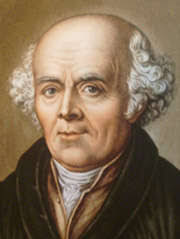

Write about the development of Hahnemann's theory of chronic disease.

Lost your password? Please enter your email address. You will receive a link and will create a new password via email.
Please briefly explain why you feel this question should be reported.
Please briefly explain why you feel this answer should be reported.
Please briefly explain why you feel this user should be reported.
Development of Hahnemann’s Theory of Chronic Disease Early Explorations into Psora (1816–1826) In his practice Hahnemann initially rejected all pathological hypotheses, insisting that “the internal essential nature of every malady…express[es] itself by the symptoms.” Yet by about 1816–1817 he beganRead more
Development of Hahnemann’s Theory of Chronic Disease
Early Explorations into Psora (1816–1826)
In his practice Hahnemann initially rejected all pathological hypotheses, insisting that “the internal essential nature of every malady…express[es] itself by the symptoms.” Yet by about 1816–1817 he began to observe that suppression of cutaneous eruptions—especially itch—was followed by persistent internal disorders. He coined this hidden, inherited predisposition “psora,” or the internal itch-disease, laying the groundwork for a miasmatic theory of chronic illness.
Proclamation and First Edition (1827–1828)
After six years of secluded research at Köthen, in 1827 Hahnemann summoned his two oldest disciples, Drs. Stapf and Gross, to reveal his doctrine of the origin of chronic disease and introduce a new class of antipsoric remedies. The very next year he published the first edition of _The Chronic Diseases, their peculiar nature and homoeopathic cure_ in four volumes. Part I expounded the three miasms—psora, syphilis, sycosis—and Parts II–IV presented 22 antipsoric medicines aimed at eradicating the latent miasm beneath obstinate chronic complaints.
Integration into the Organon (1829)
In the 4th German edition of the _Organon of Medicine_ (1829), Hahnemann added a crucial footnote to Aphorism 80: he had “spent around 12 years investigating the source of the chronic diseases.” This marked the official incorporation of his chronic-disease doctrine into his foundational therapeutic treatise, signaling that chronic miasms were as central to cure as the law of similars itself.
Expansion and Refinement (1830–1839)
– 1830: Completion of the first edition’s fourth volume, adding Kali carb. and Nat mur. to the antipsoric series (total remedies = 22).
– 1835–1839: Second enlarged German edition released in five volumes.
– Volumes I–II (1835): Updated theoretical exposition and added 13 new antipsoric remedies.
– Volume III (1837): Technical treatise on clinical methodology and case management.
– Volumes IV–V (1838–1839): Expanded materia medica with 12 more antipsoric substances—total remedies = 47.
These editions refined case-taking protocols, dosing schedules, and clarified the dynamic interaction among psora, syphilis, and sycosis in chronic pathology.
Editions at a Glance
1. First Edition (1828–1830), VOLL 4, antipsorics remedies 22, Inception of chronic-disease theory; psora, syphilis, sycosis
2. Second Edition (1835–1839), VOLL 5, antipsorics remedies 47, Enlarged theory; detailed materia medica; clinical and posology
Legacy and Impact
Hahnemann’s chronic-disease theory provoked both ardent adoption and sharp critique. It introduced a systematic, miasmatic classification of non-venereal diseases and underpinned the development of homoeopathic nosodes and intercurrent remedies. Though controversial, its influence endures in constitutional prescribing and in the way modern homeopaths conceptualize deep-seated, relapsing co# Development of Hahnemann’s Theory of Chronic Disease.
See less