
Explain the theory of dynamization

Lost your password? Please enter your email address. You will receive a link and will create a new password via email.
Please briefly explain why you feel this question should be reported.
Please briefly explain why you feel this answer should be reported.
Please briefly explain why you feel this user should be reported.
The theory of dynamization (or potentization) in homeopathy holds that through systematic dilution coupled with vigorous succussion (shaking) or trituration (grinding), a crude substance’s latent “dynamic” or “vital” medicinal power is not lost but in fact awakened and amplified—even as its materialRead more
The theory of dynamization (or potentization) in homeopathy holds that through systematic dilution coupled with vigorous succussion (shaking) or trituration (grinding), a crude substance’s latent “dynamic” or “vital” medicinal power is not lost but in fact awakened and amplified—even as its material dose approaches zero.
1. Origins & Definition
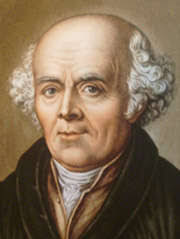
Samuel Hahnemann first formulated the concept in the 5th edition of his Organon (ca. 1826–27). He observed that large, crude doses often aggravated patients, whereas minute doses, when properly prepared, relieved symptoms more gently and deeply. He coined the term Potentisation (Dynamisation) to describe how diluting a remedy in a non-medicinal vehicle and then succussing it transforms it into a therapeutically “active” dynamic medicine.
2. Two Modes of Dynamization
• Trituration: Insoluble substances (e.g., metals, minerals) are ground with lactose to 3C or 6X, unlocking their dynamic properties by mechanical force.
• Succussion: Soluble tinctures are serially diluted (1 : 100 for C-scale; 1 : 10 for X-scale), each dilution bottle subjected to a set number of firm downward strikes. This “succussion” is said to energize the remedy at each step rather than merely dilute it away.
3. Law of Infinitesimals & Dynamic Action
Hahnemann asserted that the smaller the dose (beyond a certain point), the stronger its dynamic influence—contrary to pharmacology’s dose–response model. He argued that medicine acts not materially (by mass) but dynamically, akin to electricity or magnetism, so that the energy released through succussion can interface with the patient’s vital force more effectively than bulk material could.
4. Elaboration by Disciples
Later homeopaths—R.E. Dudgeon, Gross, Korsakoff—debated how many succussions maximize potency, what “dynamical arithmetic” underpins potency scales, and whether succussion alone (without further dilution) can hyper-dynamize. They treated dynamization as a quantitative, almost mathematical process: each succussion multiplies the remedy’s dynamism, just as repeated dilutions scale it geometrically.
5. Modern Controversy & Research
Because ultra-high potencies often exceed Avogadro’s limit (no molecules remain), dynamization remains scientifically contentious. Some researchers invoke “water memory,” nanostructures, or quantum coherence to explain how information about the original substance could persist and act therapeutically. Others seek physicochemical evidence via spectroscopy and calorimetry—efforts still inconclusive but ongoing.
50-Millesimal Scale (LM/Q Potencies) in Homoeopathy
Definition & Nomenclature
The 50-millesimal scale—also called LM or Q potencies—was introduced by Hahnemann in his Paris case books (1835–43) and published posthumously in the 6th edition of the Organon (1921). Each “LM” potency represents a 1 : 50 000 dilution of the previous potency, activated by vigorous succussion. The abbreviation “Q” derives from Latin quinquaginta milia (“fifty thousand”) and is technically correct, whereas “LM” (L = 50, M = 1000 in Roman numerals) inadvertently reads as 950 but remains widely used.
Preparation Method
1. Start with a mother tincture (MT).
2. To make LM 1 (Q1):
– Mix 1 drop of MT with 50 000 drops (approx. 1 L) of 90% alcohol or diluent.
– Succuss (shake firmly) 100 times.
3. To make LM 2 (Q2) and beyond:
– Take 1 drop of the preceding LM potency, dilute it again in 50 000 drops of diluent, then succuss 100 times.
4. For dosing: a globule or a measured sip of the final potency is dissolved in water and succussed before each administration, allowing flexible repetition without overdosing.
Historical Development
– Hahnemann’s Paris Period (1835–1843): He sought a more refined dynamization to achieve “rapid, gentle and permanent” cures without aggravations.
– Publication Delay: Though devised by Hahnemann, the LM/Q scale only appeared in print with the 6th Organon in 1921—decades after his death.
– Modern Revival: Swiss homeopaths Rudolf Flury, Pierre Schmidt and others reintroduced these potencies post–World War II, popularizing the LM terminology and clinical protocols.
Clinical Rationale & Application
– Gentle yet Deep Action: The fine gradations of 1 : 50 000 allow practitioners to adjust potency more subtly than centesimals (C potencies), reducing the risk of aggravation.
– Flexible Repetition: Because each dose is ultra-low, it can be repeated daily—or even hourly—in a glass of water without cumulative toxicity. Each fresh succussion recharges the remedy’s dynamism.
– Chronic & Sensitive Cases: LM potencies are favored for long-standing disorders or highly sensitive patients, where a single centesimal globule might be too stimulating.
Merits & Limitations
Merits:
– Maximum mildness with high dynamic energy.
– Precise titration of dose and repetition.
– Reduced incidence of homeopathic aggravations.
– Suitable for frail, elderly, pediatric or multi-medicated patients.
Limitations:
– Complex and time-consuming preparation.
– Limited availability of LM potencies outside Europe.
– Steeper learning curve; requires meticulous technique and understanding of succussion dynamics.
– Sparse large-scale clinical trials and variable practitioner experience restrict global adoption.
Further Reading & Practice Tips
– Study Hahnemann’s Paris case books for original LM protocols.
– Practice succussion technique: count firm downward strokes to standardize energy transfer.
– Compare patient responses to LM vs. high-C potencies in similar clinical scenarios.
– Explore spectroscopic research on water structures in potentized solutions for emerging scientific insights.
In homeopathic practice today, dynamization remains the cornerstone of remedy preparation, believed essential to transferring a substance’s healing “essence” into a form that resonates with and gently stimulates the patient’s self-regulating vital force.
See less