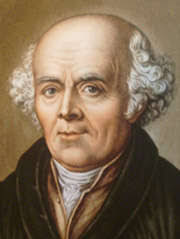

Discuss the scope of external application on light of organon of medicine.

Lost your password? Please enter your email address. You will receive a link and will create a new password via email.
Please briefly explain why you feel this question should be reported.
Please briefly explain why you feel this answer should be reported.
Please briefly explain why you feel this user should be reported.
In the Organon of Medicine, Dr. Samuel Hahnemann’s views on external applications evolved over time, and their scope is best understood by looking at both his early caution and later acceptance under specific conditions. 1. Early View – 5th Edition (Aphorisms 196–203) Hahnemann initially discouragedRead more
In the Organon of Medicine, Dr. Samuel Hahnemann’s views on external applications evolved over time, and their scope is best understood by looking at both his early caution and later acceptance under specific conditions.
1. Early View – 5th Edition (Aphorisms 196–203)
Hahnemann initially discouraged the use of local or external applications for chronic or internal diseases.
His reasoning:
External symptoms (skin eruptions, ulcers, swellings, etc.) are outward expressions of an internal disturbance of the vital force.
Suppressing these with ointments, lotions, or caustics does not cure the disease—it merely drives it inward, potentially harming vital organs.
True cure requires internal administration of the indicated remedy, guided by the totality of symptoms.
Exception: In accidental injuries (cuts, burns, bruises), local treatment for cleansing, protection, or pain relief was acceptable.
2. Later View – 6th Edition (Aphorisms 284–285)
Hahnemann expanded the scope of external applications, especially in chronic, obstinate, or localised conditions.
Key points:
The same remedy prescribed internally could also be applied externally (as lotion, liniment, ointment, glycerole, etc.) to the affected part.
This dual route could enhance the curative effect, especially in cases where the local manifestation was prominent.
Examples:
Thuja externally for stubborn sycotic excrescences
Arnica tincture for bruises (without open wounds)
Calendula lotion for wound healing
He emphasised that external use must never replace internal treatment, but rather complement it.
3. Practical Scope in Homoeopathy
When Appropriate:
Chronic skin diseases with deep internal causes
Localised sycotic growths, ulcers, or warts
Painful or inflamed areas needing soothing alongside internal cure
Injuries, burns, and post-surgical wound care
Forms of Application:
Lotions, ointments, liniments, glyceroles, medicated oils, compresses
Guiding Principle:
Always use the similimum internally, and if needed, externally in the same potency or mother tincture form, ensuring harmony with the law of similars.
✅ In essence:
See lessThe Organon teaches that external applications have a limited but valuable role—not as suppressive measures, but as adjuncts to internal treatment, especially in the 6th edition’s refined approach.