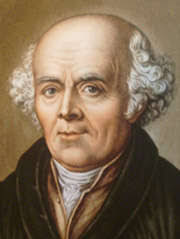

Difference between potentization and individualization

Lost your password? Please enter your email address. You will receive a link and will create a new password via email.
Please briefly explain why you feel this question should be reported.
Please briefly explain why you feel this answer should be reported.
Please briefly explain why you feel this user should be reported.
Difference Between Potentization and Individualization in Homoeopathy Potentization Potentization is the unique method of preparing homoeopathic medicines through a process of serial dilution and succussion (vigorous shaking). It is the pharmacological foundation of homoeopathic pharmacy. Key AspectRead more
Difference Between Potentization and Individualization in Homoeopathy
Potentization
Potentization is the unique method of preparing homoeopathic medicines through a process of serial dilution and succussion (vigorous shaking). It is the pharmacological foundation of homoeopathic pharmacy.
Key Aspects:
– Dilution: The original substance is diluted step by step, typically in a ratio of 1:10 (decimal scale, X) or 1:100 (centisimal scale, C)
– Succussion: After each dilution, the solution is vigorously shaken (struck against a rubber pad or other surface)
– Mechanical Process: Involves precise measurements and rhythmic succussion at each potency level
– Theory: Based on the principle that dilution combined with succussion “activates” or enhances the medicinal properties of the substance
– Potency Levels: Common scales include 6X, 30C, 200C, 1M, etc., representing the degree of dilution and succussion
Purpose:
To transform crude substances into therapeutic remedies while minimizing toxicity and maximizing therapeutic effect.
Individualization
Individualization is the clinical principle of selecting the most appropriate remedy based on the unique characteristics of each patient. It is the therapeutic application of homoeopathy’s holistic philosophy.
Key Aspects:
– Patient-Centered: Treatment focuses on the sick person, not the disease label or diagnosis
– Total Symptom Picture: Considers physical, mental, emotional, and behavioral symptoms unique to the individual
– Constitutional Type: Takes into account the person’s temperament, build, preferences, and susceptibility
– Unique Expression: Each person expresses illness differently; the remedy must match this unique expression
– Holistic Assessment: Evaluates how the individual responds to environmental, emotional, and physical stressors
Purpose:
To identify the single remedy that most closely corresponds to the patient’s entire symptom complex and constitutional profile.
Comparison Table
| Aspect | | |
– Nature: Pharmacological process; how remedies are made (Potentization) | Clinical principle; how remedies are selected (Individualization)
– Domain: Homoeopathic pharmacy/manufacturing (Potentization) | Homoeopathic practice/diagnosis (Individualization)
– Focus: Preparation method (Potentization) | Patient assessment (Individualization)
– Timing: Laboratory/preparation stage (Potentization)| Consultation/prescribing stage (Individualization)
– Key Question: “How is the remedy prepared?” (Potentization) | “Which remedy fits this patient?” (Individualization)
– Originator: Hahnemann refined this process (Potentization) | Hahnemann established this principle (Individualization)
Relationship Between the Two
Both concepts arise from Samuel Hahnemann’s foundational work in homoeopathy and are essential to classical homoeopathic practice:
1. Potentization creates remedies capable of stimulating the body’s healing response
2. Individualization ensures the correct potentized remedy is selected for each unique patient
A potentized remedy incorrectly chosen (lack of individualization) will be ineffective, while individualization without proper potentization would fail to harness homoeopathy’s unique therapeutic mechanism.
The two concepts work together: proper individualization identifies the correct substance, and proper potentization prepares it in a form suitable for safe and effective therapeutic use.
See less