
Describe the cause of miasm.

Lost your password? Please enter your email address. You will receive a link and will create a new password via email.
Please briefly explain why you feel this question should be reported.
Please briefly explain why you feel this answer should be reported.
Please briefly explain why you feel this user should be reported.
Cause of Miasm in Homoeopathic Miasmatic Concepts 1. Hahnemann's Original Concept: Suppressed Acute Infections In homoeopathic miasmatic theory, the cause of miasm is fundamentally understood as an untreated or suppressed acute infection that penetrates deeply into the organism and establishes a perRead more
Cause of Miasm in Homoeopathic Miasmatic Concepts
1. Hahnemann’s Original Concept: Suppressed Acute Infections
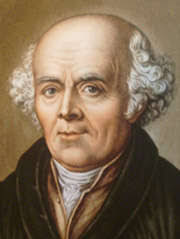
In homoeopathic miasmatic theory, the cause of miasm is fundamentally understood as an untreated or suppressed acute infection that penetrates deeply into the organism and establishes a permanent chronic predisposition. Samuel Hahnemann (1755–1843) first articulated this theory in his seminal work The Chronic Diseases, their Specific Nature and their Homeopathic Treatment (1828), proposing that all chronic diseases originate from external infectious contamination rather than from lifestyle, hereditary weakness, or simple infection alone [1,2].
Hahnemann identified three primary miasms, each traceable to a specific infectious origin:
– Psora – Derived from suppressed or untreated scabies (Sarcoptes scabiei) and other itchy skin eruptions. Hahnemann regarded this as the “most universal mother of chronic diseases,” believing it affected nearly all humanity through transmission at childbirth or during breastfeeding [1,3]. The primary manifestation was a characteristic skin eruption with intense itching, which he viewed as an “exhaust valve” for a deeper systemic disease. When suppressed (e.g., through topical mercurial ointments), the disease was driven inward, producing countless chronic conditions including asthma, epilepsy, nephritis, and arthritis [1,3].
– Sycosis – Originating from suppressed gonorrhoea (Neisseria gonorrhoeae), named from the Greek sykosis (fig-like excrescence) due to the cauliflower-like condylomas it produced [2]. Hahnemann observed that when gonorrhoeal discharges were suppressed (rather than properly cured), the “venereal virus” penetrated deeper, causing chronic inflammatory states, excessive growths, warts, and rheumatic conditions [1,2].
– Syphilis – Resulting from untreated or suppressed syphilis (Treponema pallidum), marked initially by the chancre sore. When this primary manifestation was destroyed by caustics or mercury without true cure, the miasm progressed inward, leading to bone destruction, tissue ulceration, neurological degeneration, and ultimately fatal morbidity [1,2].
2. Mechanism of Miasmatic Establishment
The causal mechanism operates through disturbance of the vital force (dynamis). Hahnemann conceptualised miasm not merely as a persistent microbial presence but as a “dynamic force” that permanently corrupts the organism’s energetic regulation [2]. When an acute infection is either left untreated or its superficial symptoms are suppressed (particularly skin eruptions and discharges), the disease agent penetrates beyond the local site, inducing a lasting “miasmatically induced change of state” throughout the entire organism [2,3]. This creates a constitutional predisposition that can manifest diversely across generations.
Hahnemann explicitly distinguished this from mere physical contagion. He proposed that transmission from mother to child occurred not through direct physical infection but through absorption of a “venereal virus” that subtly penetrated deep organs and systems—a remarkably prescient insight given that the viral nature of infectious agents would not be discovered until Dmitry Ivanovsky’s work over 60 years later [2].
3. Hereditary Transmission
Although Hahnemann died before fully developing the hereditary implications, he suspected transgenerational passage, using the German term Erbschaft (inherited/gifted) in footnotes to the 6th edition of The Organon of Medicine [2]. Later homoeopaths, notably John Henry Allen (1854–1925), explicitly established that miasms were inherited and that children could be born with these predispositions [2]. Allen introduced the concept of “miasmatic diathesis”—the tendency of a particular miasm to produce specific lesion patterns (e.g., bone lesions and ulcers as syphilitic; mucous membrane inflammation and overgrowths as sycotic) [2].
4. Modern Reconceptualisation
Contemporary homoeopathic scholars have refined the causal understanding. Vithoulkas and Chabanov (2022) propose a modern definition: “a trace of an acute disease of infectious origin which, if suppressed or not treated properly, creates a permanent chronic predisposition and can even be passed on to subsequent generations” [4]. They emphasise that while environmental hazards (toxins, drug side effects, stress) may create similar predispositions, they do not constitute true miasms in the strict sense [4].
Prafull Vijaykar’s cellular model further abstracts the cause, correlating miasms with disturbances in fundamental cellular defence mechanisms: homeostasis (Psora), growth/repair (Sycosis), and defence/destruction (Syphilis)—representing progressive stages from functional disturbance to tissue proliferation to tissue loss [5].
Reference
1. Hahnemann S. The chronic diseases, their specific nature and their homoeopathic treatment. Dresden: Arnold; 1828.
2. Vithoulkas G, Chabanov D. The evolution of miasm theory and its relevance to homeopathic prescribing. Homeopathy. 2022;111(4):1-10. doi:10.1055/s-0042-1749277
3. Close SM. The genius of homeopathy: lectures and essays on homeopathic philosophy. 2nd ed. New Delhi: B. Jain Publishers (P) Ltd; 2018.
4. Allen JH. The chronic miasms, vol I: Psora and pseudo-psora. Reprint ed. New Delhi: B. Jain Publishers (P) Ltd; 2004.
5. Allen JH. The chronic miasms, vol II: Sycosis. Reprint ed. New Delhi: B. Jain Publishers (P) Ltd; 2004.
6. Kent JT. Lectures on homoeopathic philosophy. Chicago: Ehrhart & Karl; 1919.
7. Vijaykar P. The theory of suppression and predictive homeopathy. Mumbai: Predictive Homeopathy; 2005.
8. Szabó LV. Miasma in the 21st century. Hpathy.com [Internet]. 2025 [cited 2026 May 16]. Available from: https://hpathy.com/organon-philosophy/miasma-in-the-21st-century/
9. Van der Zee H. The role and purpose of miasms. J Sci Explor. 2025;39(2):225-232. Available from: https://journalofscientificexploration.org/index.php/jse/article/view/3725/2351
10. Bhatia M. Miasms in the modern world. Hpathy.com [Internet]. 2009 [cited 2026 May 16]. Available from: https://hpathy.com/organon-philosophy/miasms-in-the-modern-world/
11. The history of miasms [PDF]. RLHH Education [Internet]. [cited 2026 May 16]. Available from: https://rlhh-education.com/backend/web/images/product-materials/The-history-of-miasms-1_20230901131212622.pdf
See less