
Define acute disease.

Lost your password? Please enter your email address. You will receive a link and will create a new password via email.
Please briefly explain why you feel this question should be reported.
Please briefly explain why you feel this answer should be reported.
Please briefly explain why you feel this user should be reported.
Acute Disease in Homoeopathy: A Comprehensive Definition 1. Fundamental Definition In homoeopathy, an acute disease is defined as a temporary, self-limiting illness that arises suddenly, progresses rapidly, and typically runs a defined course within a short period. According to the principles establRead more
Acute Disease in Homoeopathy: A Comprehensive Definition
1. Fundamental Definition
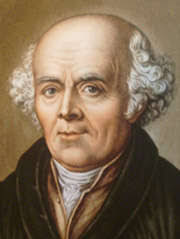
In homoeopathy, an acute disease is defined as a temporary, self-limiting illness that arises suddenly, progresses rapidly, and typically runs a defined course within a short period. According to the principles established by Dr. Samuel Hahnemann, the founder of homeopathy, acute diseases represent temporary disturbances in the vital force (life energy) that the body’s innate healing mechanism can typically overcome, either naturally or with appropriate homoeopathic intervention.
The concept is rooted in Hahnemann’s Organon of Medicine, particularly in Aphorisms 72-78, where he distinguishes between different types of diseases based on their origin, duration, and treatment approach. An acute disease in homoeopathic terms is essentially a condition where the vital force has been temporarily deranged by an acute miasm or by external factors, and the body’s inherent healing capacity remains relatively intact.
See less