


Infinitesimal Dose vs. Minimum Dose in Homeopathy Understanding the Terminology In homOeopathic terminology, these two concepts are closely related and often used interchangeably, but they have distinct meanings . Minimum Dose: The minimum dose refers to the smallest possible quantity of medicine reRead more
Infinitesimal Dose vs. Minimum Dose in Homeopathy
Understanding the Terminology
In homOeopathic terminology, these two concepts are closely related and often used interchangeably, but they have distinct meanings .
Minimum Dose: The minimum dose refers to the smallest possible quantity of medicine required to produce a scarcely perceptible homoeopathic aggravation. This concept emphasizes using the least amount of medicinal substance necessary to stimulate the vital force without causing unnecessary physiological impact . Hahnemann sought the “minimum quantity of medicinal substance” through his experiments, believing that excess medicine could overstimulate the patient and cause unnecessary aggravations .
Infinitesimal Dose: The infinitesimal dose specifically refers to the highly diluted potencies created through the process of potentization—where remedies are successively diluted and succussed (shaken). The term “infinitesimal” mathematically implies an extremely small, approaching zero, quantity. These dilutions follow scales like the Centesimal (C) and Decimal (X) scales, with the 30C potency being historically significant .
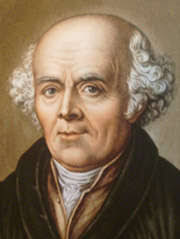
Historical Development: Samuel Hahnemann’s understanding evolved significantly over his lifetime. Initially, he used substantial material doses corresponding to those used in traditional medicine. However, after 1800, his dose sizes were gradually reduced through experimentation. He ultimately recommended the 30th centesimal dilution (30C) for most purposes, considering this the optimal balance between effectiveness and gentleness .
Which is Recommended?
The minimum dose principle is the broader, recommended concept in homOeopathy, and it encompasses the use of infinitesimal doses as its practical application .
Key Reasons for Preferring the Minimum Dose Approach:
1. Gentle Stimulation: The minimum dose stimulates the vital force without overwhelming the organism, respecting the body’s inherent healing capacity .
2. Avoidance of Unnecessary Aggravations: Using only the smallest quantity needed prevents excessive homeopathic aggravations that could discomfort the patient .
3. Law of the Least Action: This principle, discovered by mathematician Maupertuis, states that “the quantity of action necessary to effect any change in nature is the least possible” . Homeopathy aligns with this natural law by employing only minimum or infinitesimal doses.
4. LM Potencies: Hahnemann’s later work (1840s) introduced the 50 Millesimal (LM) potencies, representing an even more refined approach to dosing. These are administered in medicinal solution with precise dilution techniques, allowing for daily repetition if needed .
Practical Application
Modern homeopathic prescribing follows the minimum dose principle through:
– Selection of appropriate potency (6C, 30C, 200C, LM, etc.)
– Careful control of quantity (typically 1-4 globules per dose)
– Strategic repetition based on the patient’s response
The therapeutic dose in homeopathy is thus considered the infinitesimal or minimum dose—the sub-physiological dose that is effective without being materially significant .
Conclusion:
While both terms relate to the fundamental homeopathic principle of using highly diluted remedies, the minimum dose is the overarching therapeutic principle, while the infinitesimal dose describes the highly diluted potencies used to achieve this minimum dose. Contemporary homeopathic practice recommends adhering to the minimum dose principle, using the lowest potency and smallest quantity that produces desired results, thereby honoring Hahnemann’s original therapeutic directive.
See less

HOMEOPATHIC LOGIC CHAIN 1. VITAL FORCE exists in living beings (metaphysical concept) ↓ 2. DISEASE = disruption of vital force ↓ 3. SYMPTOMS = body's intelligent response to restore balance ↓ 4. SIMILARS = substances causing similar symptoms in healthy ↓ 5. MINUTE DOSES stimulate the vital force WITRead more
HOMEOPATHIC LOGIC CHAIN
1. VITAL FORCE exists in living beings (metaphysical concept)
↓
2. DISEASE = disruption of vital force
↓
3. SYMPTOMS = body’s intelligent response to restore balance
↓
4. SIMILARS = substances causing similar symptoms in healthy
↓
5. MINUTE DOSES stimulate the vital force WITHOUT suppressing
symptoms (unlike allopathy)
↓
6. POTENTIZATION (dilution + succussion) makes remedies
safer while preserving/imparting “energetic” properties
↓
7. INDIVIDUALIZED treatment addresses the whole person
↓
8. HEALING = restoration of vital force equilibrium
Homoeopathy Logic
The Logic (Principles) of Homoeopathy
Homoeopathy is a system of alternative medicine developed in the late 18th century by Samuel Hahnemann. Its core principles are based on two fundamental concepts:
1. The Principle of “Like Cures Like” (Similia Similibus Curentur)
This is the foundational concept of homeopathy. It states that a substance that causes symptoms in a healthy person can be used to treat similar symptoms in a sick person. For example:
Allium cepa (onion) causes watery eyes and a runny nose → historically used to treat hay fever with similar symptoms
Coffea cruda (coffee) causes insomnia and restlessness → historically used to treat sleeplessness
The idea is that the body has a natural vital force, and introducing a substance that mimics the body’s symptoms stimulates the body to heal itself.
2. The Principle of Serial Dilution and Succussion (Potentization)
Homeopathic remedies are prepared through a process called dynamization or potentization, which involves:
-Dilution: The original substance is diluted repeatedly, typically in a 1:10 (D or X) or 1:100 (C) ratio
-Succussion: After each dilution, the solution is shaken vigorously (traditionally by striking against a leather-bound surface)
Key points about the dilution process:
Common potencies include 6C, 30C, 200C (where the number indicates the number of dilutions)
A 30C dilution means the original substance was diluted 1:100 thirty times
This results in extreme dilutions — by 30C, the original substance is diluted beyond the point where even a single molecule is likely to remain in the final solution
Why Homeopaths Believe It Works
Homeopaths argue that:
The succussion process transfers “energetic” properties from the substance to the water-alcohol solution
The memory of the original substance remains even at extreme dilutions
The remedies work on an energetic or vital force level, not a biochemical one
Detailed Logic and Principles of Homeopathy
1. Historical Background: Samuel Hahnemann (1755–1843)
Homeopathy was founded by Christian Friedrich Samuel Hahnemann, a German physician who became disillusioned with conventional medicine of his era, which often involved harmful practices like bloodletting and heavy metal-based treatments.
Hahnemann’s journey began when he translated William Cullen’s “A Treatise on Materia Medica” and became skeptical of its explanations. Through self-experimentation with cinchona bark (quinine), he discovered that a substance causing symptoms in a healthy person could paradoxically treat those same symptoms in a sick person.
In 1796, Hahnemann published his foundational work “Essay on a New Principle for Ascertaining the Curative Power of Drugs”, followed by his magnum opus “Organon der rationellen Heilkunde” (Organon of Rational Medicine) in 1810, which systematized the principles of homeopathy.
2. Core Principles of Homeopathy
Homeopathy is built upon three fundamental pillars:
A. The Law of Similars (Similia Similibus Curentur)
This Latin phrase translates to “like cures like” — the central tenet of homeopathic philosophy. The principle states that:
A substance capable of producing specific symptoms in a healthy person can cure similar symptoms in a sick person when administered in minute doses
Symptoms are not the illness itself but rather the body’s intelligent response to an imbalance — they represent the body’s defense mechanisms attempting to restore homeostasis
The body possesses a “vital force” (Lebenskraft) that responds to disharmony, and homeopathic remedies stimulate this self-healing capacity
Practical Examples:
Substance Symptoms Produced Homeopathic Use
Onion (Allium cepa) Watery eyes, runny nose Hay fever, colds
Coffee (Coffea cruda) Insomnia, restlessness Sleeplessness, anxiety
Belladonna Fever, flushed skin, delirium Scarlet fever, migraines
Poison ivy (Rhus tox) Itching, restlessness Joint pain, skin eruptions
Bee venom (Apis mellifica) Burning, stinging sensation Insect bites, throat swelling
B. The Principle of Individualization
Homeopathy treats the whole person, not isolated diseases. Practitioners select remedies based on:
The unique totality of symptoms
Mental and emotional states
Physical characteristics
Lifestyle factors
Patient sensitivity and temperament
Two patients with the same conventional diagnosis may receive entirely different homeopathic treatments based on their individual symptom patterns.
C. The Doctrine of Drug Dynamization (Potentization)
The third pillar involves the unique pharmaceutical preparation process that distinguishes homeopathy from all other medical systems.
3. The Potentization Process: Detailed Methodology
Potentization (or dynamization) is the hallmark of homeopathic remedy preparation, consisting of two sequential processes:
Step 1: Serial Dilution
The original substance is diluted repeatedly in a precise ratio:
Scale Dilution Ratio Description
Decimal (D or X) 1:10 One part substance to 9 parts diluent
Centesimal (C) 1:100 One part substance to 99 parts diluent
LM (50 Millesimal) 1:50,000 One part to 49,999 parts diluent
Common Potencies and Their Dilutions:
6X: Diluted 6 times at 1:10 ratio
30C: Diluted 30 times at 1:100 ratio (dilution factor of 10⁶⁰)
200C: Diluted 200 times at 1:100 ratio (dilution factor of 10⁴⁰⁰)
Step 2: Succussion
After each dilution, the solution undergoes succussion — vigorous shaking, traditionally performed by striking the container against a leather-bound surface or firm object. This process is believed to:
Activate and energize the remedy
Transfer “energetic” or “vibrational” properties from the original substance to the diluent
Create nano-scale structures in the solvent
The Homeopathic Response to This Problem:
Homeopaths counter this by proposing alternative mechanisms:
The succussion process creates persistent nano-particle clusters or water structurations that carry information from the original substance
See lessThe electrical strain in water molecules induced by the original substance remains even when molecules are absent
Water forms nano-associates (clusters) that function as “information carriers”