


Infinitesimal Dose vs. Minimum Dose in Homeopathy Understanding the Terminology In homOeopathic terminology, these two concepts are closely related and often used interchangeably, but they have distinct meanings . Minimum Dose: The minimum dose refers to the smallest possible quantity of medicine reRead more
Infinitesimal Dose vs. Minimum Dose in Homeopathy
Understanding the Terminology
In homOeopathic terminology, these two concepts are closely related and often used interchangeably, but they have distinct meanings .
Minimum Dose: The minimum dose refers to the smallest possible quantity of medicine required to produce a scarcely perceptible homoeopathic aggravation. This concept emphasizes using the least amount of medicinal substance necessary to stimulate the vital force without causing unnecessary physiological impact . Hahnemann sought the “minimum quantity of medicinal substance” through his experiments, believing that excess medicine could overstimulate the patient and cause unnecessary aggravations .
Infinitesimal Dose: The infinitesimal dose specifically refers to the highly diluted potencies created through the process of potentization—where remedies are successively diluted and succussed (shaken). The term “infinitesimal” mathematically implies an extremely small, approaching zero, quantity. These dilutions follow scales like the Centesimal (C) and Decimal (X) scales, with the 30C potency being historically significant .
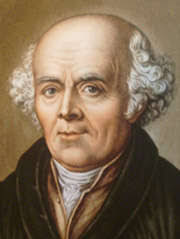
Historical Development: Samuel Hahnemann’s understanding evolved significantly over his lifetime. Initially, he used substantial material doses corresponding to those used in traditional medicine. However, after 1800, his dose sizes were gradually reduced through experimentation. He ultimately recommended the 30th centesimal dilution (30C) for most purposes, considering this the optimal balance between effectiveness and gentleness .
Which is Recommended?
The minimum dose principle is the broader, recommended concept in homOeopathy, and it encompasses the use of infinitesimal doses as its practical application .
Key Reasons for Preferring the Minimum Dose Approach:
1. Gentle Stimulation: The minimum dose stimulates the vital force without overwhelming the organism, respecting the body’s inherent healing capacity .
2. Avoidance of Unnecessary Aggravations: Using only the smallest quantity needed prevents excessive homeopathic aggravations that could discomfort the patient .
3. Law of the Least Action: This principle, discovered by mathematician Maupertuis, states that “the quantity of action necessary to effect any change in nature is the least possible” . Homeopathy aligns with this natural law by employing only minimum or infinitesimal doses.
4. LM Potencies: Hahnemann’s later work (1840s) introduced the 50 Millesimal (LM) potencies, representing an even more refined approach to dosing. These are administered in medicinal solution with precise dilution techniques, allowing for daily repetition if needed .
Practical Application
Modern homeopathic prescribing follows the minimum dose principle through:
– Selection of appropriate potency (6C, 30C, 200C, LM, etc.)
– Careful control of quantity (typically 1-4 globules per dose)
– Strategic repetition based on the patient’s response
The therapeutic dose in homeopathy is thus considered the infinitesimal or minimum dose—the sub-physiological dose that is effective without being materially significant .
Conclusion:
While both terms relate to the fundamental homeopathic principle of using highly diluted remedies, the minimum dose is the overarching therapeutic principle, while the infinitesimal dose describes the highly diluted potencies used to achieve this minimum dose. Contemporary homeopathic practice recommends adhering to the minimum dose principle, using the lowest potency and smallest quantity that produces desired results, thereby honoring Hahnemann’s original therapeutic directive.
See less
Drug Potential in Homoeopathy Drug potential (also referred to as potency or potentization) is a fundamental concept in homoeopathy that describes the process of preparing homoeopathic medicines through serial dilution and succussion (vigorous shaking). This process is believed to activate and enhanRead more
Drug Potential in Homoeopathy
Drug potential (also referred to as potency or potentization) is a fundamental concept in homoeopathy that describes the process of preparing homoeopathic medicines through serial dilution and succussion (vigorous shaking). This process is believed to activate and enhance the therapeutic properties of the original substance.
Key Aspects of Drug Potential
1. Definition and Purpose
Drug potential serves as a means of measuring the dynamic energy and mode of action of potentiated homoeopathic medicines. It is obtained by the virtue of position, meaning the remedy’s strength is determined by how many times it has been diluted and succussed during preparation.
2. The Process of Potentization
The preparation involves two key steps:
– Dilution: The original substance is diluted with alcohol or distilled water in a systematic manner
– Succussion: After each dilution, the solution is vigorously shaken, which homeopaths believe releases the inherent energy of the substance
3. Potency Scales
Homoeopathic medicines are prepared using different scales of potentization:
1. Decimal (X)- 1:10 dilution – 1 part substance to 9 parts diluent
2. Centesimal (C)- 1:100 dilution – 1 part substance to 99 parts diluent
3. LM (50-millesimal)- 1:50,000 dilution- Introduced by Samuel Hahnemann for sensitive patients
4. Common Potencies Used
The potencies most commonly used today include 6C, 30C, 200C, 1M (1000C), 10M, CM (10,000C), and the LM scale. Higher numbers indicate more dilution steps, meaning the remedy is more “potent” in homeopathic terms.
Important Principles
According to homoeopathic doctrine:
– Like cures like ( similia similibus curentur ): A substance that produces symptoms in healthy people can cure similar symptoms in sick people
– Law of minimum dose: The more diluted the remedy, the more effective it becomes in stimulating the body’s healing response
Summary: Drug potential in homoeopathy refers to the measure of a remedy’s therapeutic strength, determined by the number of sequential dilutions and succussions performed during its preparation, using scales like decimal (X), centesimal (C), or 50-millesimal (LM).
See less