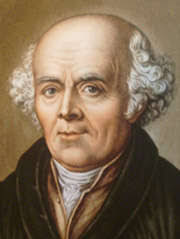

How will you describe the chief complaints of a patients according to Boenninghausen's method?

Lost your password? Please enter your email address. You will receive a link and will create a new password via email.
Please briefly explain why you feel this question should be reported.
Please briefly explain why you feel this answer should be reported.
Please briefly explain why you feel this user should be reported.
Boenninghausen's Method for Describing Chief Complaints in Homoeopathic Case-Taking: A Comprehensive Review Abstract Boenninghausen's method represents a systematic and clinically reliable approach to homoeopathic case-taking that emphasizes the complete characterization of symptoms through their moRead more
Boenninghausen’s Method for Describing Chief Complaints in Homoeopathic Case-Taking: A Comprehensive Review
Abstract
Boenninghausen’s method represents a systematic and clinically reliable approach to homoeopathic case-taking that emphasizes the complete characterization of symptoms through their modalities, sensations, locations, and concomitants. This document provides a comprehensive analysis of how chief complaints should be described according to Boenninghausen’s principles, drawing from primary sources and contemporary interpretations. The method addresses the fundamental challenge that patients typically present with incomplete symptom descriptions by providing a logical framework for reconstructing complete symptom pictures. By recognizing that symptoms consist of multiple interconnected dimensions and establishing a clear hierarchy of symptom reliability, Boenninghausen’s approach enables practitioners to construct reliable therapeutic totwoods even from fragmentary case information.
1. Introduction
1.1 Historical Context
Clemens Maria Franz von Boenninghausen (1785-1864) was one of the earliest and most influential proponents of homoeopathy after Samuel Hahnemann. Boenninghausen, a physician and lawyer who was himself cured of tuberculosis by Hahnemann, dedicated his career to systematizing and refining homoeopathic methodology [1]. His contributions to the development of the homoeopathic materia medica and repertory have had lasting influence on the practice of homoeopathy worldwide.
Boenninghausen faced significant challenges in applying Hahnemann’s principles in clinical practice. The traditional approach to case-taking, which relied heavily on the patient’s narrative account, often resulted in incomplete or fragmented symptom descriptions that made remedy selection difficult [2]. This practical difficulty prompted Boenninghausen to develop a more systematic approach that would allow the physician to work reliably with incomplete case information while still adhering to Hahnemann’s therapeutic principles [3].
1.2 The Challenge of Incomplete Symptoms
One of Boenninghausen’s central observations was that symptoms recorded in the pure materia medica are often fragmentary, presenting only partial aspects of complete symptom complexes [2]. This fragmentation occurs because provers, while under the influence of a pathogenic substance, experienced only portions of the complete symptom picture available to them. Boenninghausen reasoned that the same phenomenon occurs in patients: their incomplete symptom descriptions represent fragments of a complete symptom complex caused by a single disease disturbance [2].
This insight had profound implications for case-taking methodology. Boenninghausen proposed that the scattered parts of a case must be found and brought together in harmonious relation according to the typical form of the remedy [2]. The physician’s task is not merely to record what the patient volunteers but to actively reconstruct the complete symptom through systematic questioning and logical inference. This approach requires understanding that every symptom has multiple dimensions that must be explored fully before a reliable prescription can be made [1].
1.3 The Complete Image of Illness
Boenninghausen’s aim was to minimize the practical difficulty of finding the indicated remedy, but he was not willing to come down to a level of prescribing on a single symptom [3]. Instead, he sought to develop a comprehensive method for capturing the totality of characteristic symptoms that would accurately represent the patient’s disease state. This totality, which he described as the “complete image of an illness” or “complete case,” forms the foundation of his therapeutic approach [2].
The concept of totality in Boenninghausen’s method differs significantly from Kent’s later interpretation. While Kent emphasized the mental symptoms and the overall portrait of the patient as the primary organizing principle of the case, Boenninghausen focused on the complete characterization of individual symptoms and their interrelationships [4]. This difference in emphasis has important implications for case-taking technique, symptom hierarchy, and remedy selection [5].
2. The Four Components of Every Symptom
2.1 Conceptual Framework
Boenninghausen identified that every symptom can be understood as consisting of four distinct components: locality, sensation, modality, and concomitant [2]. This tetralogy, sometimes referred to as the “four pillars of symptom analysis,” provides the structural framework for describing and analyzing chief complaints according to Boenninghausen’s method.
The recognition that symptoms have multiple components allows the physician to break down complex symptom presentations into their constituent elements for analysis. This analytical approach serves multiple purposes: it guides the case-taking process by indicating what questions to ask, it helps identify which symptoms are most reliable for differentiation, and it provides a systematic method for comparing the patient’s presentation with the drug pictures in the materia medica [2].
2.2 Locality (Location)
The anatomical region or organ system affected forms the foundation of symptom analysis. Boenninghausen assigned locality the third position in his hierarchy of symptom reliability, noting that provers demonstrated the greatest variation in this dimension [2]. This variability means that location alone provides limited value for remedy differentiation unless combined with other symptom components.
However, the importance of locality should not be dismissed entirely. Certain locations become highly characteristic when combined with specific sensations and modalities [2]. For example, the symptom “pain in the lumbar region while lying down that is relieved by pressure” carries more differentiating power than location or modality alone. The hierarchy means that a symptom’s power to distinguish between remedies increases as you move from location to sensation to modality [2].
In clinical practice, the location should be recorded with precision, including laterality, specific anatomical structures involved, and any radiation or extension of symptoms to other areas. The depth of involvement—whether surface or deep, internal or external—also provides valuable differentiating information [6]. Boenninghausen emphasized that localities must be considered subordinate to complaints, which are in turn subordinate to modalities, but this subordination does not negate their clinical utility when properly contextualized [2].
2.3 Sensation (Quality of Complaint)
The subjective experience of the patient—pain type, discomfort quality, or sensory change—forms the second pillar of symptom analysis [2]. Sensations must be explored thoroughly because they reveal the essential nature of the pathological change. Common sensations like “pain” or “discomfort” are insufficient; the specific character—whether burning, pressing, tearing, throbbing, stinging, or drawing—provides the needed characteristic quality that distinguishes remedies from each other [7].
Boenninghausen understood that the same anatomical location could produce radically different sensations in different individuals or under different circumstances. These differences in sensation quality often reflect fundamental differences in the nature of the pathological process and therefore carry significant differentiating power for remedy selection [1]. For instance, a headache described as “pressing outward” suggests a different remedy picture than one described as “throbbing and pulsating” or “as if a band were tightly bound around the head.”
The sensation should be explored in terms of its character, intensity, timing, and progression. The patient’s own words and metaphors often provide valuable clues to the quality of sensation that should be preserved and explored rather than translated into technical terminology [7]. Questions should probe for the precise quality of any discomfort, the way the symptom feels to the patient, and any unusual or distinctive sensory experiences that might serve as characteristic indicators.
2.4 Modality (Conditions of Aggravation and Amelioration)
Boenninghausen considered modalities to be the most reliable and important characteristic of all symptoms [2]. His extensive study of provings convinced him that modalities remain consistent regardless of the potency used and therefore provide the most dependable foundation for prescription [8]. The conditions under which symptoms appear, increase, decrease, or disappear—including time of day, position, temperature, movement, and emotional states—constitute the essential general characteristics of the case.
From Boenninghausen’s perspective, modalities have far more significant relation to the totality of the case than is usually supposed [1]. He emphasized that conditions of aggravation and amelioration are never confined exclusively to one symptom or another; rather, they represent general characteristics that apply throughout the case and connect its various parts. A correct choice of remedy often depends chiefly upon these generalized modalities, which provide the connecting thread that weaves scattered symptoms into a coherent totality [1].
Modalities can be classified into several categories: temporal modalities (time of day, season, periodicity), positional modalities (lying, sitting, standing, specific positions), thermal modalities (heat, cold, weather conditions), modality related to movement (motion, rest, specific activities), and emotional/mental modalities (anger, grief, excitement, stress) [7]. Each category provides different perspectives on the patient’s condition and contributes to the overall characterization of the complaint.
The importance of modalities in Boenninghausen’s method led to the development of his Therapeutic Pocket Book, which organized symptoms by modality rather than by location as in traditional anatomical repertories [9]. This structural innovation reflected Boenninghausen’s understanding that modalities provide the most reliable path to the similimum and therefore deserve primary emphasis in clinical case-taking [9].
2.5 Concomitant (Accompanying Symptoms)
The fourth and final component encompasses all symptoms that accompany the chief complaint [2]. Boenninghausen distinguished between concomitants that share a common pathogenic process with the chief complaint and those that belong to a different sphere of the organism [4]. Both types provide valuable clinical information, though their significance differs.
Concomitants that share modalities, sensations, or locations with the chief complaint are considered particularly valuable because they strengthen the characterization of the symptom complex [2]. These “striking concomitants” provide crucial distinguishing information when they demonstrate consistent relationships with the main complaint. The recognition that the uniqueness of a case lies in its particular combination of otherwise common features underscores the importance of carefully identifying all relevant concomitants [2].
Boenninghausen observed that concomitants appearing in different spheres of the organism—something appearing in the skin that accompanies joint symptoms, for example—often indicate deeper systemic disturbances that may not be directly related to the chief complaint but nonetheless contribute to the totality of the case [4]. These cross-sphere connections often prove decisive in remedy selection, particularly in chronic or complex cases where the surface presentation may not adequately represent the underlying pathological state.
3. The Hierarchy of Symptom Reliability
3.1 Development of the Hierarchy
Boenninghausen’s systematic study of homoeopathic provings led him to establish a clear hierarchy of symptom reliability that guides clinical practice [2]. This hierarchy emerged from his observation that different symptom components demonstrated varying degrees of consistency across different provers and different potencies. By ranking symptoms according to their reliability, Boenninghausen provided practitioners with a rational basis for prioritizing certain symptom aspects over others in case analysis.
The hierarchy reflects Boenninghausen’s understanding that symptoms are not equally valuable for remedy differentiation. Some symptoms appear consistently across provers and remain stable regardless of the potency used, while others show considerable variation between individuals or change significantly with different potencies [8]. This variation has direct implications for clinical practice: symptoms that demonstrate greater consistency and stability should receive more weight in the process of remedy selection than those showing greater variability.
3.2 The Three Levels of Reliability
Modalities hold the first position as most reliable because they remain consistent across different potencies and provers [2]. This consistency makes modalities the most dependable foundation for prescription and explains Boenninghausen’s emphasis on thorough case-taking regarding conditions of aggravation and amelioration. The practical implication is that the physician should invest considerable effort in eliciting all relevant modalities before proceeding to remedy selection.
Sensations occupy the second position, showing reasonable consistency but more variation than modalities [2]. While sensations provide valuable differentiating information, they demonstrate greater inter-individual variation in provings and may change somewhat with different potencies. Nonetheless, the quality of sensation remains an essential component of symptom analysis and should be carefully characterized.
Locations rank third, demonstrating the greatest variability between provers and therefore requiring more careful interpretation [2]. The location alone provides limited differentiating value, as the same anatomical region may be affected by many different remedies with different characteristic sensations and modalities. Boenninghausen emphasized that location should be considered subordinate to complaint, which is in turn subordinate to modalities [2].
3.3 Implications for Prescribing
The hierarchy of symptom reliability has direct implications for prescribing methodology. Boenninghausen observed that when modalities are sufficiently distinguishing, they can be used exclusive of lower-order symptoms in determining the homoeopathic prescription [2]. This principle allows the physician to reach a reliable prescription even when the complete symptom picture remains fragmentary or incomplete.
The practical application of this hierarchy involves systematic case-taking that prioritizes modalities over sensations, which in turn take precedence over locations. When analyzing a case, the physician should first identify all available modalities, then explore sensations that accompany these modalities, and finally specify locations that share the same characteristic features. This analytical sequence ensures that the most reliable symptom aspects receive appropriate emphasis in the process of remedy selection.
4. Characteristic Symptoms and Keynotes
4.1 The Concept of Characteristic
In Boenninghausen’s framework, “characteristic” refers to consistency rather than rarity or strangeness [2]. This understanding differs from some interpretations that emphasize bizarre or unusual symptoms as the primary indicators for remedy selection. Hahnemann’s criterion of “striking, singular, uncommon and peculiar” (from Organon Aphorism 153) does not necessarily mean bizarre or rare symptoms; rather, it means symptoms that are consistently present and distinctly expressed [7].
The grand characteristics are symptoms that are prominent, occur in more than one symptom complex in the case, and include non-regional modalities and sensations found across multiple body locations [2]. These generalized characteristics carry more differentiating power than symptoms confined to single locations because they represent fundamental aspects of the patient’s constitutional state rather than local manifestations of disease.
Boenninghausen’s emphasis on consistency over rarity reflects his practical concern with clinical reliability. Symptoms that appear consistently across provers and patients provide a more dependable foundation for prescription than rare or unusual symptoms that may occur only occasionally [8]. This approach minimizes the risk of over-reliance on anecdotal or exceptional presentations at the expense of the more consistently demonstrated remedy pictures.
4.2 Keynote Symptoms
Guernsey’s concept of “keynote” symptoms refers to those within a remedy’s totality that most strongly declare its individuality [2]. A keynote requires both prominence, meaning it is consistently present in provings, and uncommon nature, meaning it is not shared by many remedies. The remedy keynote expresses an essential and prominent aspect of the remedy and may serve as a quick guide to a small group of remedies sharing a centrally important and highly characterizing feature [2].
However, Boenninghausen himself was cautious about over-reliance on keynote symptoms [3]. He aimed to minimize the practical difficulty of finding the indicated remedy but was not willing to come down to a level of prescribing on a single symptom, even one as apparently decisive as a keynote [3]. The keynote, while valuable, represents only one aspect of the complete symptom complex and should be evaluated within the broader context of the total symptom picture.
4.3 The Totality of Characteristics
The uniqueness of a case lies in its particular combination of otherwise common features [2]. Boenninghausen understood that none of the individual characteristics, on its own, is necessarily strange or rare—not even the keynote symptoms. What proves most defining, distinctive, and remarkable is the occurrence of these characteristics as a totality displayed in a single patient [2]. This totality is met by one remedy alone, distinguishing it from all other presentations.
This understanding has important implications for case analysis. The physician should seek recurring modalities and sensations across multiple symptoms, as these generalized features become the most reliable guides to the remedy [2]. The combination of characteristics matters more than any single characteristic taken in isolation. A systematic approach to case-taking that seeks to identify all available characteristic features and their interrelationships provides the most reliable foundation for remedy selection.
5. Boenninghausen’s Systematic Approach to Chief Complaints
5.1 Step One: Symptom Completion by Analogy
The first step in analyzing a chief complaint involves recognizing that symptoms are often fragmentary and requires a method for completing them [2]. Boenninghausen observed that since provers were under the influence of a single pathogenic disturbance, their incomplete symptoms were fragmented glimpses of a single symptom complex. The same logic applies to patients—their incomplete symptoms represent fragments of a complete symptom complex caused by a single disease disturbance [2].
The method of symptom completion by analogy involves transferring consistent modalities and sensations from well-described symptoms to complete the missing details of less well-described symptoms [2]. This requires the homoeopath to think analogically, finding patterns in the complete symptoms that can be applied to incomplete ones. When a symptom is missing one or more of its components—for example, when the patient reports a sensation without specifying its modalities—the physician can often infer the missing elements from other symptoms that share the same sensation or location.
The principle underlying this method is that the complete symptom complex should be internally consistent. Modalities that appear with one symptom should, if genuinely characteristic of the patient’s state, appear consistently across multiple symptoms [2]. This consistency allows the physician to identify which modalities are truly characteristic and which represent local or incidental variations.
5.2 Step Two: Generalization of Modalities
The second step involves recognizing that modalities and sensations are not bound to specific locations [2]. From Boenninghausen’s perspective, these general characteristics belong to the whole patient and can be applied across multiple symptom complexes. This recognition of generality represents one of Boenninghausen’s most significant contributions to homoeopathic methodology.
The indicated conditions of aggravation or amelioration are never confined exclusively to one symptom or another; they represent general characteristics that apply throughout the case [1]. A correct choice of remedy depends very often chiefly upon these generalized modalities, which provide the connecting thread that weaves scattered symptoms into a coherent totality [1]. This principle has important practical implications: when a patient reports that a particular condition affects one symptom, the physician should explore whether the same condition affects other symptoms as well.
The technique of generalization serves multiple purposes in clinical case-taking. It allows the physician to identify characteristic features that appear across multiple symptoms, thereby strengthening the reliability of the symptom picture. It provides additional differentiating information when the chief complaint alone does not clearly indicate a particular remedy. And it enables the physician to work with incomplete symptom information by extending characteristics from well-described symptoms to less completely described ones.
5.3 Step Three: Eliciting the Complete Symptom
The complete symptom must be explored in terms of all its dimensions. The case taker should investigate what the patient feels (sensation), where they feel it (location), and under what conditions it changes (modality) [7]. Additional questions should explore concomitant symptoms that accompany the main complaint and any striking features that distinguish this particular presentation from others.
The analysis should seek recurring modalities and sensations across multiple symptoms, as these generalized features become the most reliable guides to the remedy [2]. This systematic approach ensures that no characteristic information is overlooked and that the resulting symptom picture represents a complete rather than fragmentary view of the patient’s condition.
The goal of this process is to construct a symptom hierarchy that reflects Boenninghausen’s reliability ranking: causative modalities first, then features of the chief complaint in terms of modalities, sensations, and locations, then striking concomitants, then pathological physical generals, then cravings and aversions, and finally accessory symptoms [2]. This hierarchy provides the framework for subsequent repertorization and remedy selection.
6. Boenninghausen’s Symptom Hierarchy for Analysis
When analyzing a case according to Boenninghausen’s method, symptoms should be evaluated in a specific order of importance that reflects the hierarchy of reliability [2]. This systematic approach ensures that the most reliable symptoms receive appropriate emphasis in the process of remedy selection.
6.1 First Position: Causative Modalities
The causative modalities in both the mental and physical spheres address the etiology and triggering factors of the complaint [2]. These include the exciting cause of the illness, circumstances that brought on or aggravated the symptoms, and any identifiable precipitating factors. Causative modalities often prove decisive in remedy selection because they reveal the patient’s fundamental sensitivity or susceptibility.
In practice, the physician should carefully investigate what factors the patient associates with the onset or aggravation of their symptoms. This includes physical factors such as exposure to weather, motion, food, and activities, as well as emotional factors such as grief, anger, disappointment, and stress. The significance of causative modalities in Boenninghausen’s method reflects his understanding that disease arises from a disturbance in the patient’s vital force that manifests in characteristic reactions to specific provocative factors [1].
6.2 Second Position: Features of the Chief Complaint
The features of the chief complaint should be described in terms of modalities (most important), sensations, and locations [2]. This prioritization reflects the hierarchy of reliability: modalities provide the most dependable differentiating information, followed by sensations, with locations contributing less but still valuable characterization.
The chief complaint requires complete characterization: every sensation should be accompanied by its modalities, every location should be specified in terms of the sensations it hosts and the conditions that modify it, and every modality should be traced to its associated symptoms wherever possible. This complete characterization provides the foundation for reliable remedy selection.
6.3 Third Position: Striking Concomitants
Striking concomitants that have modalities, sensations, or locations in common with the chief complaint provide crucial distinguishing information [2]. These accompanying symptoms strengthen the characterization of the symptom complex and often prove decisive in differentiating between remedies that share features of the chief complaint.
Concomitants that appear in different spheres of the organism—something appearing in the skin that accompanies joint symptoms, for example—often indicate deeper systemic disturbances [4]. These cross-sphere connections often prove decisive in remedy selection, particularly in chronic or complex cases where the surface presentation may not adequately represent the underlying pathological state.
6.4 Fourth Position: Pathological Physical Generals
Pathological physical generals described in terms of modalities, sensations, and locations represent the patient’s general state of health beyond the immediate complaint [2]. These include changes in appetite, thirst, sleep, temperature preferences, and other general functions that reflect the overall state of the vital force.
Physical generals often provide the connecting thread between seemingly unrelated symptoms. When a patient reports multiple complaints that share no obvious connection, the physical generals may reveal underlying patterns that unify the presentation and point toward a specific remedy picture.
6.5 Fifth Position: Cravings and Aversions
Cravings and aversions for food, drink, and environmental conditions provide valuable but somewhat less reliable information [2]. These preferences and dislikes often reflect the patient’s constitutional type and may indicate susceptibility to certain remedies, particularly in chronic cases.
While cravings and aversions should be recorded carefully, they should not receive the same weight as modalities of the chief complaint in the process of remedy selection. Their value lies primarily in confirming or strengthening an impression formed on the basis of more reliable symptoms.
6.6 Sixth Position: Accessory Symptoms
Accessory symptoms include mental, emotional, and physical features of the patient’s normal state, which help complete the picture but should not dominate the analysis [2]. These include the patient’s typical temperament, reactions to stress, sleep patterns, and general disposition.
Accessory symptoms play an important role in confirming the remedy picture once a limited number of remedies have been identified through the more reliable symptom categories. They should be considered chiefly when making the final choice of remedy from among the likely remedies, not as the primary organizing principle of the case [7].
7. Practical Considerations for Case Taking
7.1 Addressing the Challenge of Incomplete Descriptions
Patients frequently cannot provide complete symptom descriptions, presenting instead what appears to the novice as a heterogeneous collection of symptoms or fragments of symptoms [2]. Possibly there may not appear to be one complete symptom in the entire record. The homoeopath’s task is to find these scattered parts and bring them together in harmonious relation according to the typical form of the remedy [2].
This requires patience, systematic questioning, and the ability to recognize patterns across seemingly unrelated symptoms. The physician should develop a systematic approach to case-taking that ensures all four components of each symptom are explored, that modalities are traced across multiple symptoms, and that the patient’s narrative is organized into a coherent symptom hierarchy.
The technique of symptom completion by analogy provides a practical method for addressing incomplete descriptions. When a symptom is missing one or more of its components, the physician can often infer the missing elements from other symptoms that share the same sensation or location [2]. This logical extension of available information allows the physician to work with fragmentary case material while maintaining the reliability that comes from using only characteristic symptoms.
7.2 Emphasis on Physical Symptoms
Boenninghausen placed great emphasis on physical symptoms, whether particulars or generals [2]. When a case is rich in physical symptoms, the Boenninghausen approach proves particularly handy because these symptoms can be more reliably characterized and repertorized than mental symptoms alone [2]. This emphasis reflects Boenninghausen’s understanding that physical symptoms, being more concrete and observable, provide more consistent information than the more variable and subjective mental symptoms.
The practical implication is that the physician should develop particular skill in eliciting and analyzing physical symptoms. The complete characterization of physical symptoms in terms of locality, sensation, modality, and concomitant provides a reliable foundation for remedy selection even in cases where the mental picture remains unclear or ambiguous.
7.3 Role of Mental Symptoms
While Boenninghausen recognized the importance of mental symptoms, he emphasized that they should be considered chiefly when making the final choice of remedy from among the likely remedies, not as the primary organizing principle of the case [7]. This reflects his understanding that mental symptoms can be misleading as they are often perceived in various uncertain ways and can be overlooked or incorrectly ascertained [7].
This does not mean that mental symptoms should be ignored. Rather, they should be evaluated within the context of the complete symptom picture rather than used as the starting point for case analysis. The mental state may serve as an important confirmation of the remedy picture but should not receive the same weight as physical modalities in the initial stages of remedy selection [7].
7.4 Use of the Therapeutic Pocket Book
Boenninghausen’s Therapeutic Pocket Book organizes symptoms differently than Kent’s repertory, reflecting his understanding that symptoms consist of multiple dimensions that must be addressed individually before being combined in the final analysis [9]. The structure of the Pocket Book allows for the reconstruction of complex symptoms through retrieving their separately indexed components.
The remedy relationships and allied remedies feature prominently in the Pocket Book, providing additional guidance when the symptom picture remains unclear after initial repertorization [9]. Boenninghausen understood that the repertory is essentially an index and may be advantageously used as such for discovering particular symptoms as well as for grouping remedies containing certain symptoms [9]. This practical approach to repertory use reflects Boenninghausen’s emphasis on clinical reliability over theoretical completeness.
8. The Integrated Case-Taking Approach
8.1 Combining Generalization and Sensation
Contemporary practitioners have developed integrated approaches that combine Boenninghausen’s generalization method with the sensation approach developed by Sankaran and others [1]. This integration recognizes the complementary nature of these methodological approaches: Boenninghausen’s emphasis on modalities provides the structural framework for reliable symptom characterization, while the sensation approach provides insight into the deeper pathological processes that underlie the symptom picture.
The integrated approach proceeds in three stages: first, elicit modalities using Boenninghausen’s generalization framework; second, repertorize using modalities for remedy selection (with software like Heiner Frei’s Polarity Analysis); third, arrive at the final remedy from suggested remedies using the sensation method [1]. This systematic approach maximizes the reliability of the symptom analysis while providing access to the deeper layers of pathology that determine the patient’s fundamental susceptibility.
8.2 Polarity Analysis
Heiner Frei’s polarity analysis represents one of the most significant contemporary developments in Boenninghausen’s methodology [8]. This approach uses the modality-based symptom evaluation to determine the polarity of the indicated remedy—its position on the spectrum from strong to weak manifestation of characteristic symptoms. The polarity analysis allows for precise remedy selection based on the matching of modality patterns rather than the simple counting of rubric matches.
The polarity analysis provides a systematic method for applying Boenninghausen’s emphasis on modalities in clinical practice [8]. By distinguishing between symptoms that indicate strong manifestation of a characteristic (which often corresponds toaggravation) and those that indicate weak manifestation (which often corresponds to amelioration), the polarity analysis provides a framework for understanding the patient’s fundamental state of health and matching it to the appropriate remedy.
9. Clinical Application
9.1 Eliciting Chief Complaints
When eliciting chief complaints according to Boenninghausen’s method, the physician should begin with an open-ended invitation for the patient to describe their main problem in their own words. This narrative account provides the initial symptom complexes that will be analyzed and completed through subsequent questioning.
Following the initial narrative, systematic questioning should explore each symptom in terms of its four components: what the patient feels (sensation), where they feel it (location), under what conditions it changes (modality), and what accompanies it (concomitant). For each symptom, the physician should ask specifically about conditions ofaggravation and amelioration, time relationships, positional factors, and any accompanying symptoms that might provide additional characterizing information.
The physician should seek to identify modalities that appear across multiple symptoms. When a condition such as “worse from cold” appears with one symptom, it should be traced to other symptoms to determine whether it represents a general characteristic of the patient’s state. This generalization of modalities provides the connecting thread that weaves scattered symptoms into a coherent totality.
9.2 Organizing the Case
Once all symptoms have been elicited, they should be organized according to Boenninghausen’s hierarchy of reliability. Causative modalities should be listed first, followed by features of the chief complaint in order of reliability (modalities, then sensations, then locations). Concomitants, pathological physical generals, cravings and aversions, and accessory symptoms should follow in sequence.
The organized case should be reviewed to identify the characteristic features that distinguish this presentation from others. These characteristics should be traced across multiple symptoms to confirm their reliability. The final symptom hierarchy should reflect the complete picture of the patient’s condition, with the most reliable symptoms given appropriate emphasis in the process of remedy selection.
9.3 Repertorization and Remedy Selection
Repertorization according to Boenninghausen’s method emphasizes modalities as the primary rubric selection criteria. The most important modalities should be selected for repertorization, with lesser weight given to locations and sensations unless they provide particularly characteristic information.
The repertorization should be followed by careful materia medica study of the leading remedies to confirm the symptom match. Boenninghausen emphasized the importance of going to the materia medica to study the mental and emotional symptoms of leading remedies rather than relying solely on repertory rubrics for the final remedy selection [2]. This confirmatory study often reveals aspects of the remedy picture that were not captured in the repertorization but nonetheless prove decisive in selecting the similimum.
10. Conclusion
Boenninghausen’s method offers a systematic, reliable approach to case-taking that emphasizes the complete characterization of symptoms through their modalities, sensations, locations, and concomitants. By recognizing that symptoms are often fragmentary and by providing a logical framework for completing them, this method enables the homoeopath to construct a reliable totality even from incomplete case information.
The emphasis on modalities as the most reliable symptom characteristic, combined with the technique of generalization across symptom complexes, provides a practical foundation for accurate prescription. The approach requires careful attention to detail, thorough questioning about conditions ofaggravation and amelioration, and the ability to recognize patterns that connect disparate symptoms into a coherent remedy picture.
Boenninghausen’s contribution to homoeopathic methodology extends beyond the specific techniques of case-taking to encompass a fundamental reconceptualization of how symptoms should be understood and used in clinical practice. His recognition that symptoms consist of multiple interconnected dimensions, his establishment of a clear hierarchy of symptom reliability, and his systematic approach to symptom completion by analogy all represent lasting contributions to the advancement of homoeopathic practice.
Contemporary developments in Boenninghausen’s methodology, including polarity analysis and the integration of the sensation approach, demonstrate the continued relevance of his principles to modern clinical practice. By combining Boenninghausen’s emphasis on reliable symptom characterization with newer methodological developments, practitioners can achieve greater accuracy in remedy selection and more consistent therapeutic outcomes.
References
1. Shah D. Key to successful prescribing using Boenninghausen’s generalization and sensation approach. *Homeopathy*. 2016. Available from: https://hpathy.com/homeopathy-papers/key-successful-prescribing-using-boenninghausens-generalization-sensation-approach/
2. Wilson K. A homeopathic student’s introduction to Boenninghausen’s Therapeutic Pocketbook. *Hpathy*. 2023. Available from: https://hpathy.com/homeopathy-papers/a-homeopathic-students-introduction-to-boenninghausens-therapeutic-pocketbook/
3. Facebook. Learn with fun: Boenninghausen’s concept of totality. BHMS Gallery; 2023. Available from: https://www.facebook.com/bhmsgallery/posts/learn-with-funboenninghausens-concept-of-totality-boenninghausen-faced-many-diff/1147826729066503/
4. Schappert C, Kluge F, editors. Rediscovering the relevance of Boenninghausen and Boger’s methods. *Homeopathy*. 2015. Available from: https://www.thieme-connect.com/products/ejournals/pdf/10.1055/s-0032-1327814.pdf
5. Hahnemann Institute Sydney. The Bönninghausen repertory. Sydney: Hahnemann Institute; 2023. Available from: https://www.hahnemanninstitute.com/commercial
6. Boenninghausen CM. *Therapeutic Pocket Book*. Translated by CM Boger. New Delhi: B. Jain Publishers; 1995.
7. Hahnemann S. *Organon of Medicine*. 6th ed. Translated by W. Boericke. New Delhi: B. Jain Publishers; 2002.
8. Frei H. *Polarity Analysis in Homoeopathy*. New Delhi: B. Jain Publishers; 2008.
9. MLD Trust. Understanding Boenninghausen’s concordance. *JISH*. 2018. Available from: https://mldtrust.org/jish-understanding-boenninghausens-concordance/
10. Dimitriadis G. *Homeopathic Diagnosis: Hahnemann through Boenninghausen*. Sydney: The Australian Institute of Homeopathy; 2004.
11. Boger CM. *Boenninghausen’s Characteristics and Repertory*. New Delhi: B. Jain Publishers; 2001.
12. Schuett K. Repertorization methods Kent – Boenninghausen – Boger: An overview. 2018. Available from: https://center4wellbeing.com/wp-content/uploads/2018/01/Repertorization-Methods-Kent-Boenninghausen-Boger-An-Overview.pdf
13. Homeopathy 360. Boenninghausen’s concepts in clinical practice. 2020. Available from: https://www.homeopathy360.com/boenninghausens-concepts-in-clinical-practise/
14. Boenninghausen CM. *Lesser Writings*. Translated by TF Allen. New Delhi: B. Jain Publishers; 2003.
15. RadarOpus. Happy Birthday Boenninghausen! 2023. Available from: https://www.radaropus.com/blog/20/Happy-Birthday-Boenninghausen
See less